
1. What Is a Mini Dumper?
A mini dumper is a small material transport machine designed to carry soil, sand, gravel, demolition waste, fertilizer, wood, bricks, and more.
It is widely used by:
- Construction contractors
- Landscape companies
- Farmers and orchard owners
- Rental companies
- Municipal maintenance teams
Today, two main types dominate the global market:
- Track Mini Dumper (crawler type)
- Wheel Mini Dumper (wheeled type)
The most discussed category in recent years is the Mini Tracked Dumper.
2. Track vs Wheel Mini Dumper – What’s the Core Difference?
🚜 Track Mini Dumper
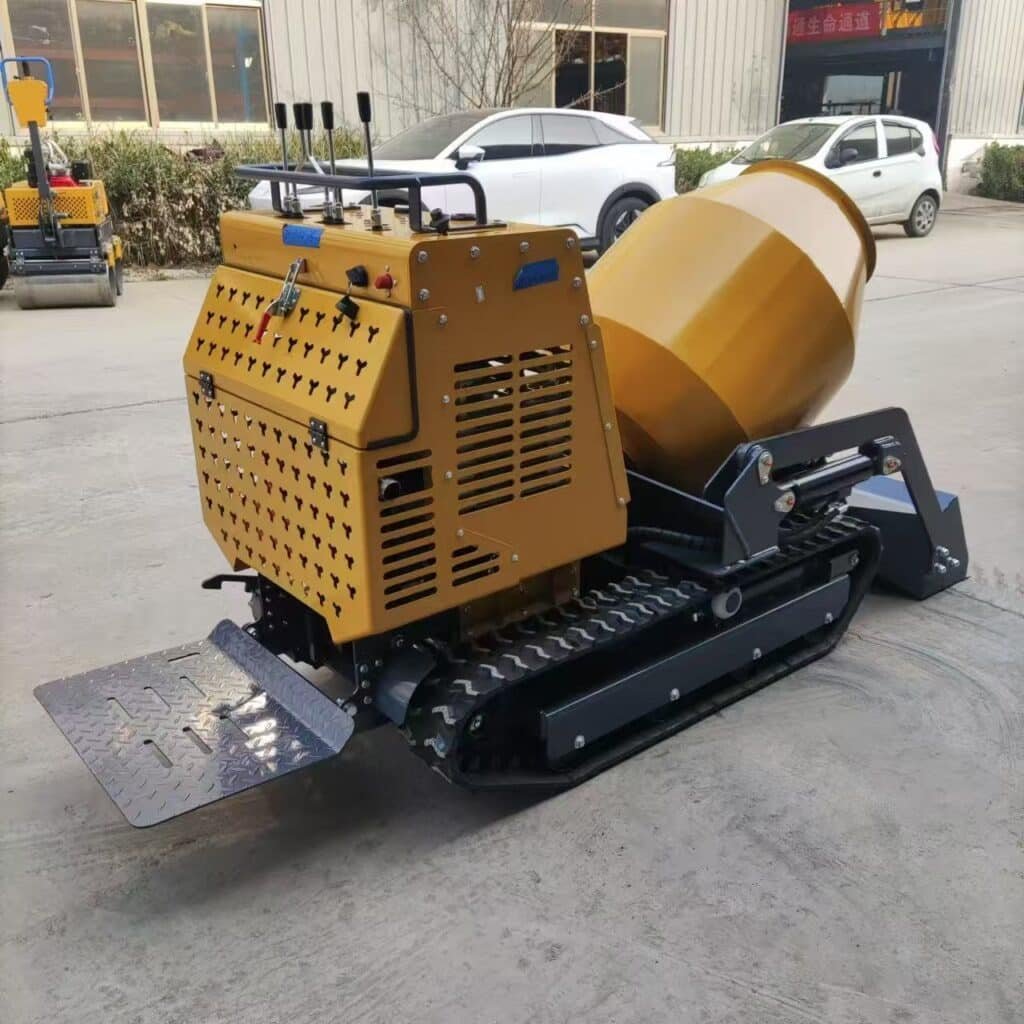
Main feature: Rubber tracks instead of wheels.
Tracks spread the weight across a larger surface area.
That means:
- Lower ground pressure
- Better grip
- More stability on soft ground
Common in Europe, Canada, Australia.
🚚 Wheel Mini Dumper
Main feature: 2 or 4 pneumatic tires.
Wheels concentrate weight in smaller contact areas.
That means:
- Faster on hard ground
- Easier steering on pavement
- Lower upfront cost
3. Where Track Dumpers Clearly Win
From a factory production and export perspective, tracked dumpers have grown much faster than wheeled ones in the past five years. Here’s why.
3.1 Mud, Snow, and Soft Ground
In Germany, Canada, and Northern Europe, soft ground is common.
Wheel dumpers easily sink or spin.
Track dumpers move steadily.
Many distributors report:
Customers who buy wheels for farm use often switch to tracks within 2 years.
3.2 Better Stability on Slopes
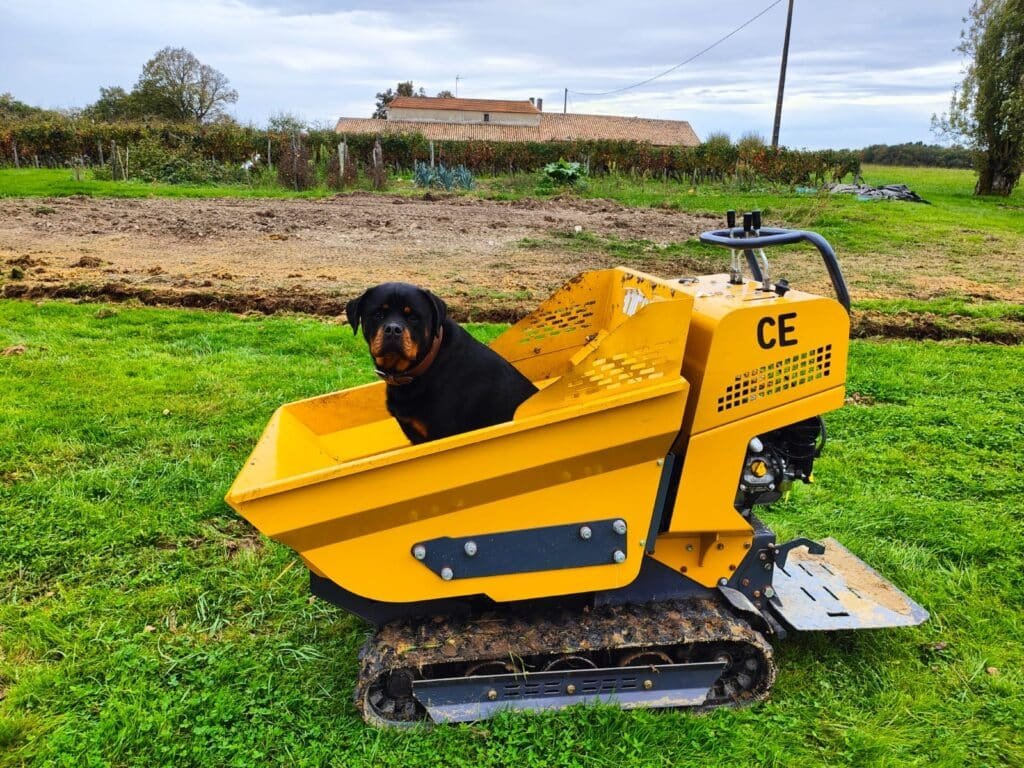
Tracks provide stronger ground grip.
On 20–25° slopes:
- Wheels may slip
- Tracks hold better balance
This is critical for orchard work and landscaping.
Safety equals fewer claims and fewer lawsuits.
For rental companies, this matters a lot.
3.3 Lower Ground Damage
Tracks distribute pressure evenly.
For:
- Turf
- Garden
- Golf course
- Backyard projects
Tracked machines leave less mark.
Wheel machines leave tire ruts.
3.4 Higher Load-to-Size Ratio
Tracked dumpers often carry heavier loads relative to machine size.
Example:
A 500kg wheel dumper may struggle on uneven terrain.
A 500kg track dumper handles it easily.
That means better productivity per hour.
4. When Wheel Dumpers Still Make Sense
Wheel dumpers are not “bad machines.” They just suit different scenarios.
They are good for:
- Concrete surface
- Indoor warehouse
- Urban pavement jobs
- Flat and dry areas
They are also:
- Slightly cheaper
- Faster driving speed
If 90% of work is on hard ground, wheels can be practical.
5. Why More Importers Choose Chinese Track Dumpers
This is the key question.
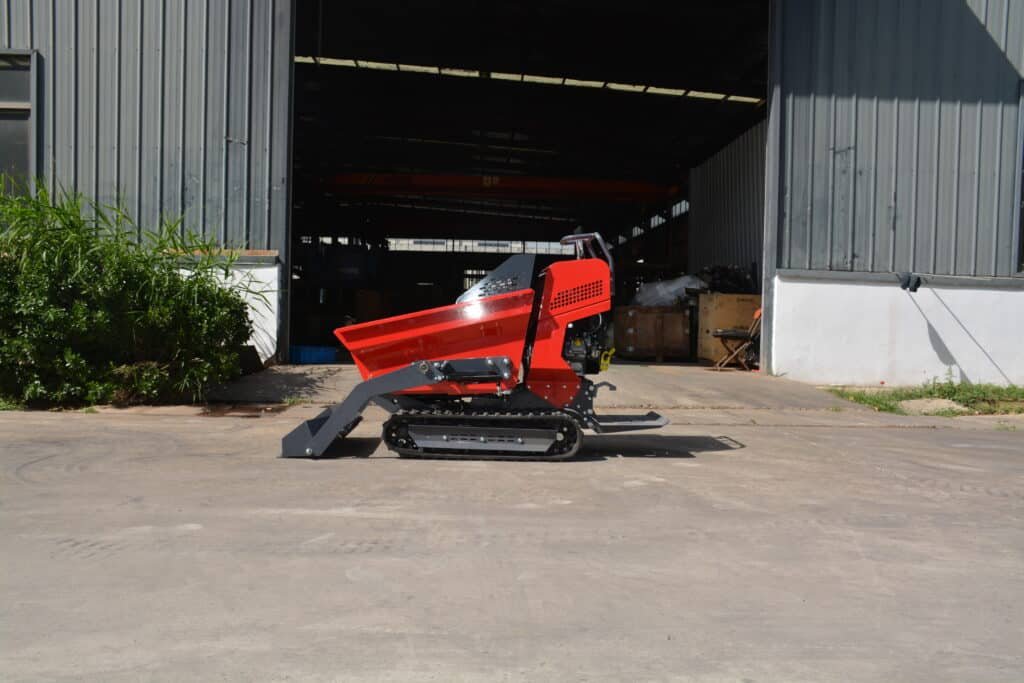
Many buyers from Europe and North America now import track dumpers from China.
Why?
5.1 Mature Rubber Track Supply Chain
China produces huge volumes of rubber tracks.
This means:
- Stable quality
- Competitive price
- Easy spare parts availability
Factories like Nicosail have stable suppliers for track systems and hydraulic components.
That reduces failure rate significantly.
5.2 Price vs Performance Balance
Compared to European-made track dumpers, Chinese machines cost much less.
But quality gap has narrowed.
For B2B importers, this creates room for margin.
Example model:
Buy from China → Rebrand → Sell locally → Provide service
Profit margin often 20–35%.
That’s why many distributors prefer tracked dumpers — better resale story.
5.3 Simple Structure = Lower Maintenance
Tracked dumpers use:
- Hydraulic drive system
- Mechanical throttle
- Simple control layout
No complicated electronics.
For farmers and rental fleets, simple is better.
Fewer electronic boards = fewer complaints.
5.4 Export Experience
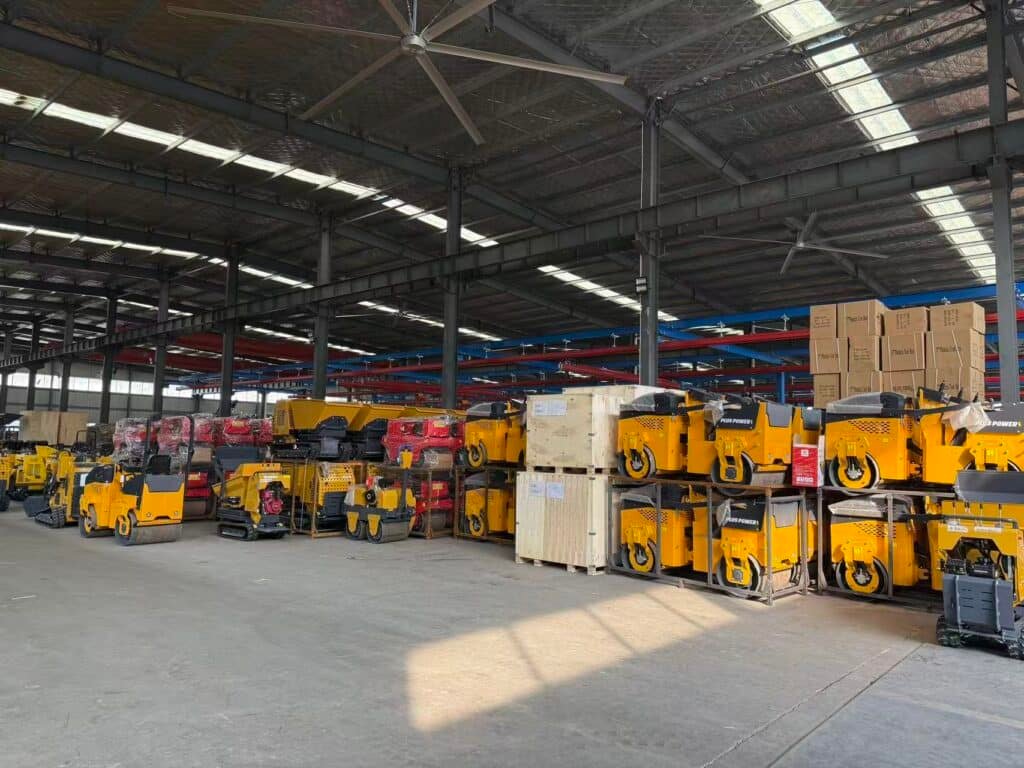
Many reliable factories attend international trade shows regularly.
They understand:
- CE certification
- EPA engine requirement
- Shipping documentation
- Spare parts packaging
Nicosail, for example, exports to Europe, North America, and Australia, and focuses on practical improvements instead of only appearance.
6. Cost Comparison: Purchase, Maintenance & Resale
Purchase Cost
Wheel dumper: Lower
Track dumper: Slightly higher
But difference is not dramatic.
Maintenance Cost
Wheel dumper:
- Tire wear
- Wheel hub issues
Track dumper:
- Track replacement (usually 2–3 years depending on usage)
Rubber tracks are durable if used correctly.
Resale Value
Tracked machines usually:
- Resell faster
- Hold better value
Especially in markets with snow and rain.
Rental companies also prefer track machines because they are more universal.
7. How to Select the Right Mini Dumper for Your Market
Ask these questions:
- What terrain dominates your market?
- Are customers mostly farmers or contractors?
- Is rental business important?
- Is snow or heavy rain common?
- What is average load requirement?
If terrain is unpredictable → choose tracks.
If mostly hard surface → wheels may be enough.
For distributors, tracked models are easier to promote because they solve more problems.
8. Real Factory Insights: What Buyers Often Miss
After 30 years in compact machinery manufacturing, here are common mistakes buyers make:
Mistake 1: Only Compare Engine Brand
Engine matters.
But more important:
- Hydraulic pump quality
- Welding strength
- Track tension system
- Bearing grade
A weak frame cracks before engine fails.
Mistake 2: Ignore Ground Pressure Data
Tracks reduce ground pressure.
That affects real performance more than engine horsepower.
Mistake 3: Overlooking Spare Parts Support
Ask supplier:
- How fast can tracks be delivered?
- Are hydraulic pumps standard models?
- Is there parts stock?
A serious factory can answer clearly.
9. Why Many Dealers Cooperate with Nicosail
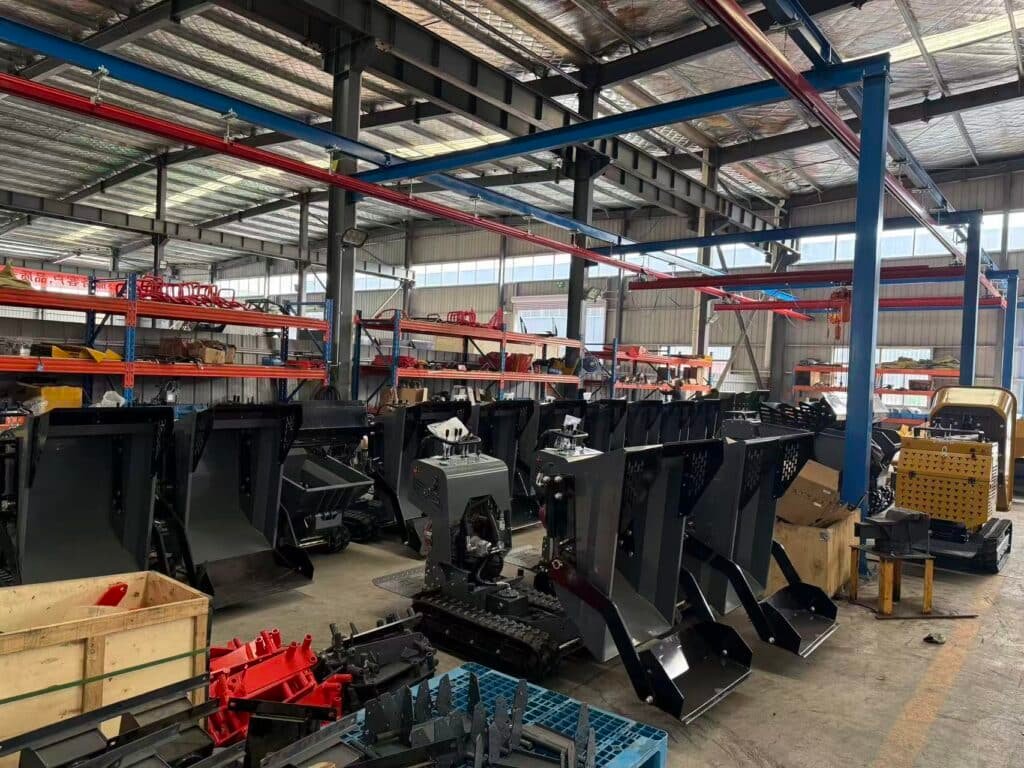
Nicosail is a genuine manufacturing factory in China focusing on:
- Mini excavators
- Compact tracked loaders
- Mini tracked dumpers
Advantages often appreciated by distributors:
- Stable production schedule
- Honest communication
- Custom branding support
- Practical engineering improvements
Instead of chasing extremely low price, focus stays on reliability balance.
That reduces long-term complaint rate.
For importers like those in Germany and Canada, this matters more than saving $100 per unit.
10. FAQ – What Buyers Always Ask
Q1: Are track dumpers harder to maintain?
No. Maintenance is simple. Track tension adjustment and periodic inspection are enough.
Q2: How long do rubber tracks last?
Usually 800–1500 working hours depending on terrain and operator habit.
Q3: Are Chinese track dumpers reliable?
Quality depends on factory. Mature exporters with stable hydraulic suppliers provide very consistent machines.
Q4: Which is better for rental business?
Track dumpers. They handle more environments and reduce operator misuse risk.
Q5: Is price difference worth it?
For most buyers, yes. Track machines create more application possibilities and resale value.
11. Final Thoughts
Track vs wheel mini dumper is not about which is “better.”
It is about which fits the real working environment.
But in today’s global market:
Tracked dumpers offer:
- Better terrain adaptability
- Higher stability
- Wider customer acceptance
- Stronger resale value
That is why many international buyers choose Chinese track dumpers.
Factories like Nicosail focus on practical reliability, stable supply chain, and export experience, which makes them a steady partner for distributors and contractors.
For buyers who want fewer complaints, wider market coverage, and better long-term value, track mini dumpers are often the smarter investment.
Choosing the right machine at the beginning saves years of trouble later.