
Introduction: Why look at Chinese mini excavators now?
If you’re in Europe or the United States and shopping for a compact machine, you’re probably looking at a few key factors: foot-print, attachments, cost, service, durability. In 2025, the “mini excavator” segment—traditionally dominated by manufacturers in Japan, Europe and the U.S.—is seeing serious competition from China. Chinese makers are getting smarter, better and more globally aware.
By “mini excavator” here I mean machines in the ~1–5 ton (and slightly above) class: those you can use for landscaping, utility work, small infrastructure or rental. Because these machines often have to comply with tight emissions rules, night-work restrictions, or just compact site access, the brand you pick matters.
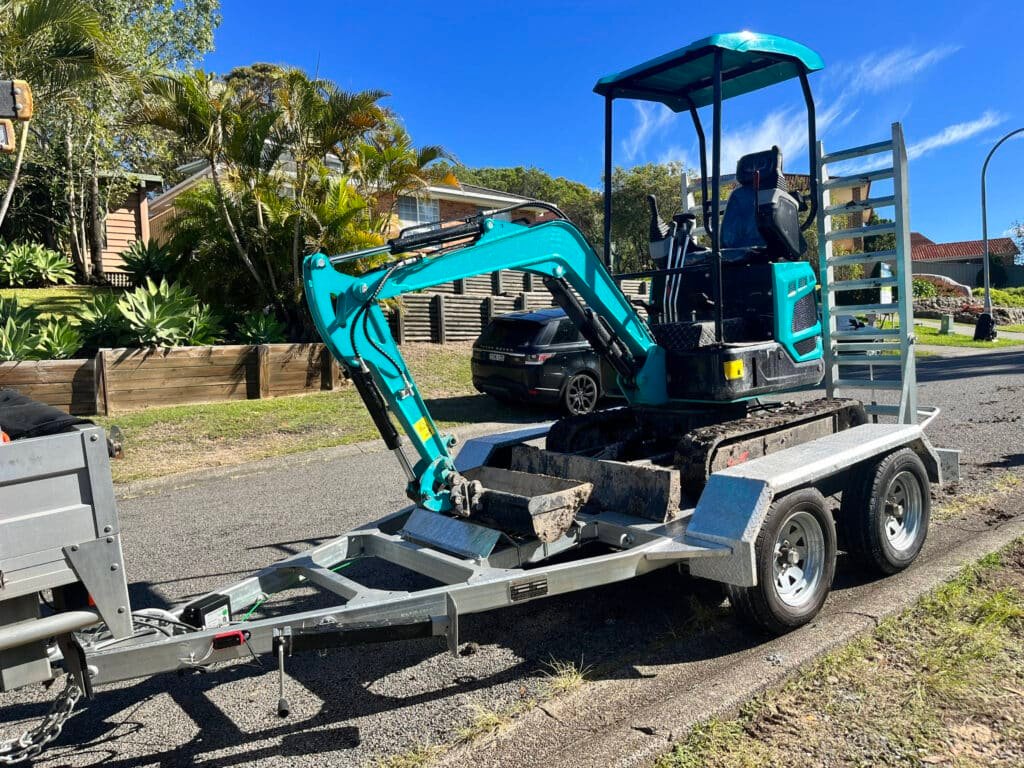
Why consider Chinese brands now? There are three main reasons:
- Price-value advantage: Chinese manufacturing has matured. You can often get comparable digging specs, attachments and features for less. Many Chinese machines listed in 2025 already meet CE/EPA standards for export.
- Global ambition: Brands like SANY and XCMG are not just exporting; they’re setting up local networks, adapting to local markets.
- Smart buyer awareness: Buyers are more savvy now, looking beyond brand logos to specs, service, parts, life-cost. This opens the door for less-known but capable players.
That said: there are risks. Service network gaps, parts availability, certification confusion, and resale value uncertainty. Which is why this article walks you through recommended Chinese mini excavator brands worth considering for Europe/USA, what to check, and how to make a smart decision.
Key criteria when evaluating a mini excavator brand for Europe/USA
Before diving into brands, here’s a handy checklist of what you should consider when evaluating a Chinese mini excavator for your European or American market project:
Certification & emissions: Especially in Europe you’ll need CE-marked machines that meet Stage V (or equivalent) emissions, safety standards (ROPS/OPG), sound levels, etc. For the U.S., look at EPA/Tier standards, local dealer compliance. For example, SANY advertises mini excavators for Europe meeting Tier-4F/Stage V.
Service & spare parts network: A great machine is useless if you can’t get parts or service locally. Evaluate dealer presence, parts stock, shipping time for wear items (pins, bushings, hydraulic hoses). Online forums confirm that parts and support are a weak point for some Chinese imports.
Total cost of ownership (TCO): Look beyond purchase price. Consider fuel efficiency, maintenance intervals, component quality, resale value, shipping/import costs (duties, logistic). Some “cheap” machines may cost more over time if reliability is low.
Brand reputation & export experience: Brands with established export history to Europe/USA, proven user feedback, references in your market will reduce risk. A brand new to your region may offer good specs but unknown reliability.
Fit for your jobsite: Mini excavators vary in undercarriage, boom swing, attachments, zero-tail-swing vs conventional tail, compact foot-print, operator comfort. For Europe/USA rental or landscaping work you might prefer models with boom swing, retractable undercarriage, compact width.
In the sections below I’ll review some strong Chinese brands through the lens of these criteria.
China’s mini excavator manufacturing surge
China has long been recognized as a major manufacturing hub for construction machinery, and in recent years the mini excavator segment has grown rapidly. According to industry summaries, Chinese mini excavator brands—from budget machines to advanced compact models—are increasingly aimed at export markets and global competitiveness.
Key trends include:
- Export orientation: Many Chinese manufacturers now list CE/EPA compliance and export models explicitly. For instance, product listings mention “Euro 5/EPA approved” machines.
- Component improvements: Where earlier machines might have used lower-cost parts, newer models use engines from known brands (Kubota, Yanmar), better hydraulics, and improved serviceability.
- Competitive pricing: The entry price of 1-2 ton Chinese mini excavators is significantly lower compared with traditional Japanese/European brands, making them attractive for rental or small contractor use.
- Growing risk management: Buyers are increasingly aware of needing local parts/agents, export documentation, local service—so manufacturers are adapting.
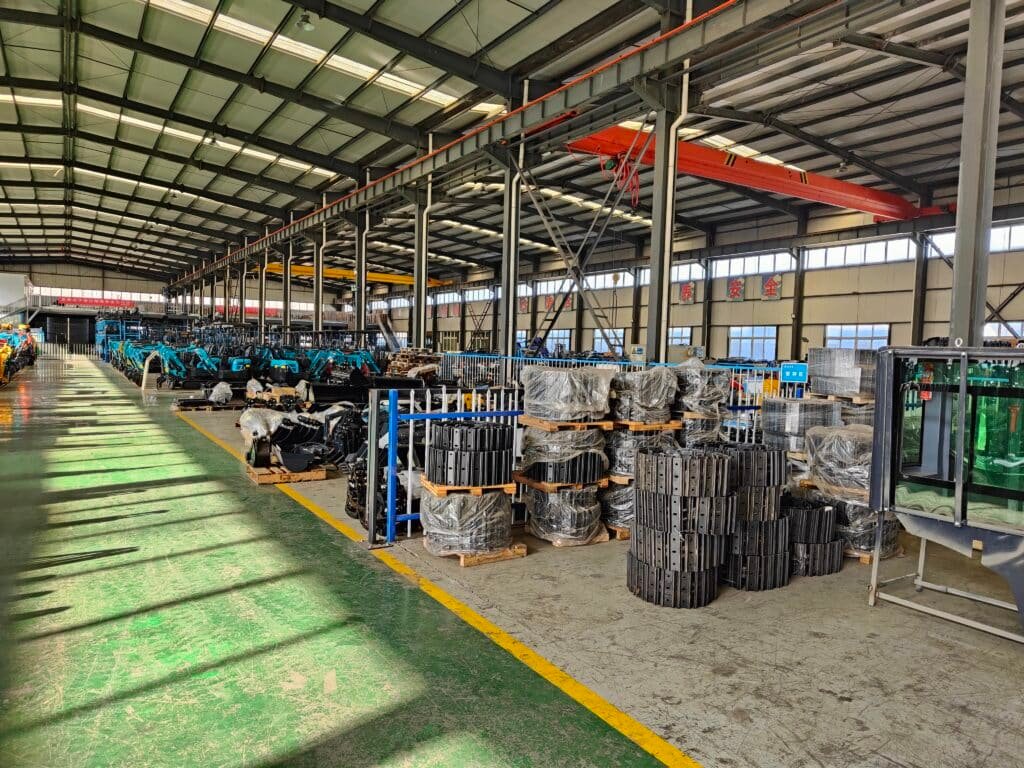
However, some of the challenges remain:
- Certification complexity: Meeting both European and U.S. standards (emissions + safety) can be tricky for smaller Chinese brands.
- Parts/dealer network: For smaller brands, building a truly global or multi-continent service network costs time and investment.
- Resale and brand perception: In some Western markets, “Chinese brand” may still carry a perception of lower value, affecting resale or rental-market demand.
In short: The time is right to consider Chinese mini excavator brands if you do your homework. Let’s look at some specific brands.
Brand #1 – SANY (China)
Company background
SANY Heavy Industry Co., Ltd. (SANY) is a major Chinese construction-machinery manufacturer founded in 1989, headquartered in Changsha, Hunan. It ranks among the global heavy-equipment leaders.
Mini excavator lineup for Europe/USA
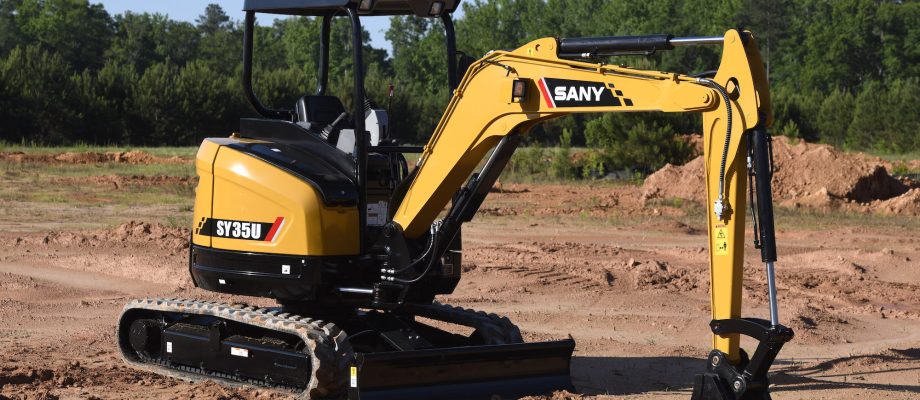
SANY explicitly lists mini excavators within its product range for Europe and America. On the European site you’ll find models like the SY16C-Tier4F and SY18C below 2.5 tons. For the U.S., SANY America mentions a 2T-to-57T range of excavators including mini versions.
Strengths
- Global footprint & brand recognition: With established operations in Europe (SANY Europe GmbH) and America (SANY America) the brand offers more confidence for parts/service.
- Strong export compliance: They highlight compliance with Tier/Stage emission standards and market-specific customization.
- Variety of models: The mini range is broad enough for under-3 ton and up to ~5 ton applications.
Where to watch
- Price premium: With stronger brand and network, SANY machines may cost more than lesser-known Chinese brands, narrowing the “value” advantage.
- Parts availability in remote regions: Even for SANY, local parts stock and dealer responsiveness depend on region—so check for your specific country.
Brand #2 – XCMG (China)
Company profile
Xuzhou Construction Machinery Group Co., Ltd. (XCMG) is another major Chinese manufacturer with a global footprint. It has built a strong export and service network.
Models and export readiness
On the USA side the XCMG USA site lists mini models like the XE18U, XE27U, XE35U, XE55U. For Europe, XCMG European sales documentation shows models like the XE80E (~9.5 t) with Kubota engine, Stage V compliance.
Strengths
- Export-tailored machines: The XE80E example shows emphasis on European standards, comfortable operator cabin, service access.
- Reasonable price/feature balance: For many contractors the value proposition is strong.
- Service network improving: Documentation cites dedicated European Sales & Services GmbH, R&D and purchasing centres in Europe.
Areas to check
- Mini segment depth: While they have compact models, check the exact spec you need (e.g., <2 ton or zero-tail swing) and local dealer support for that size.
- Local parts availability: Especially for smaller markets, non-stocked parts may cause delays.
Brand #3 – Lonking (China)
Who they are
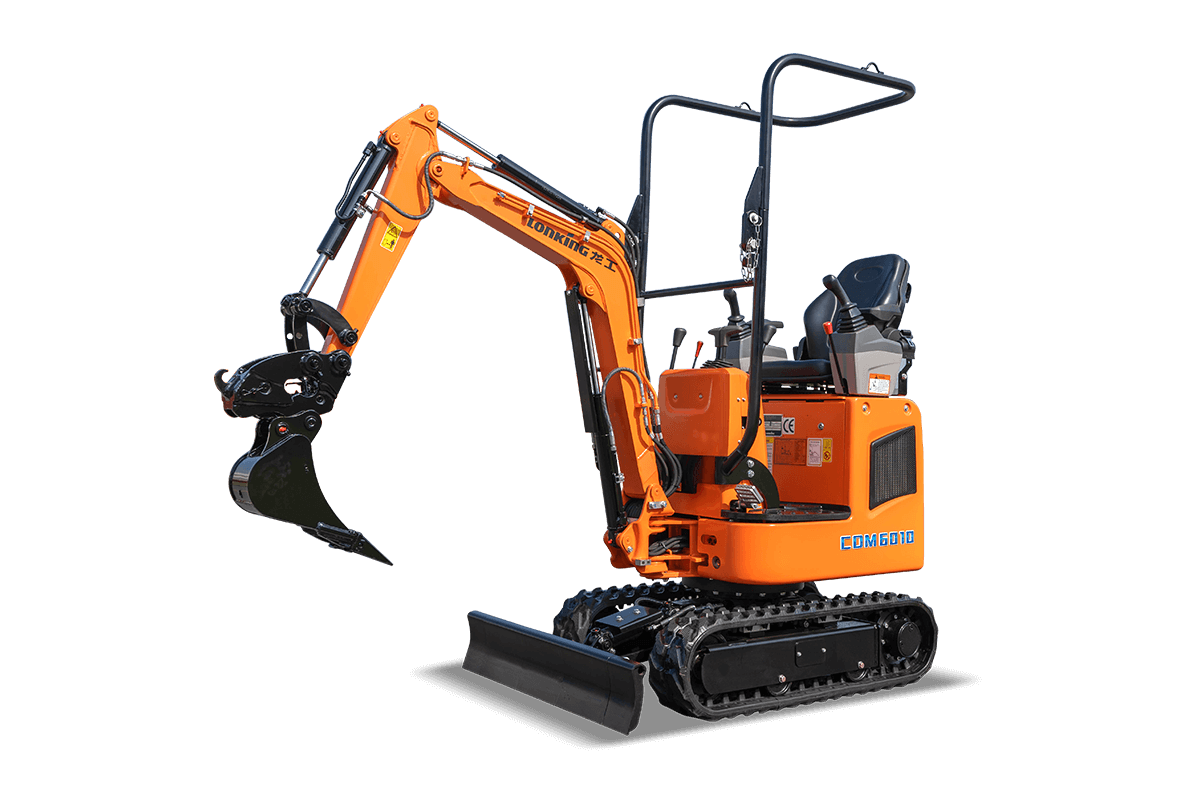
Lonking Holdings Limited, founded in 1993, is a Chinese construction-machinery manufacturer producing excavators, wheel loaders, rollers.
Why they might appeal
- Budget‐friendly positioning: Lonking tends to sit toward the more cost-competitive segment, which might make sense for rental fleets or small contractors.
- Export capability: Lonking exports worldwide, so their machines may already be in use in Europe/USA landscapes.
Limitations to consider
- Smaller service network in West: Compared to SANY or XCMG, their Western dealer/parts footprint may still be less mature.
- Brand recognition: For resale or rental acceptance in certain markets, brand may matter—so check local acceptance.
- Model selection: Ensure the exact mini model (e.g., <3 ton discrete model) includes the attachments and service features you need (boom swing, hydraulic circuits etc).
Brand #4 – LiuGong (China)
Legacy manufacturer
Guangxi LiuGong Machinery Co., Ltd., founded in 1958, is among China’s longest-running construction-equipment firms. They produce a wide range of earth-moving machines including mini excavators.
Mini-excavator focus
Given their long history and global presence (including facilities/outlets in Poland, U.S., etc) they are well worth consideration. Their dealer network is more mature than many smaller entrants.
Fit for Europe/USA?
- Pros: Strong backing, proven parts/distribution network, manufacturing scale.
- Cons: Their mini excavators may focus on broader small excavator category rather than ultra‐compact <2ton “mini” models; check the specific model.
- Tip: For rugged utility work or rental use where brand/resale may matter, LiuGong may be an interesting middle ground.
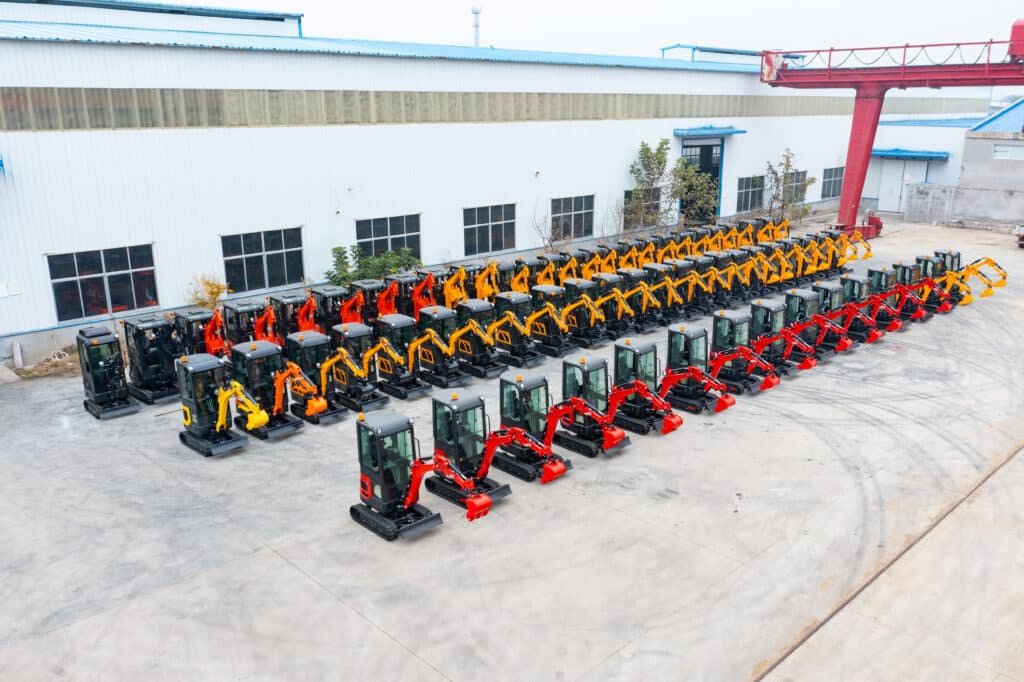
Brand #5 – Nicosail (China) – A rising name to keep an eye on
I want to highlight Nicosail not because I’m recommending it wholeheartedly above all others, but because it represents the kind of emerging Chinese brand that may offer excellent value—provided you do your homework.
Why this brand merits mention
- Nicosail appears to be entering or positioning for export markets (Europe/USA) and is visible in dealer listings.
- It may offer models tailored for compact job-sites, with a competitive cost base.
- For buyers who prioritise value, smaller brand risk can be acceptable if mitigated by local support/planning.
What they’re doing for Europe/US markets
- While detailed publicly available info may be more limited than for the big brands, the very fact a buyer is aware and considering them suggests Chinese brands are diversifying.
- If you’re in Europe/USA and willing to engage directly, smaller brands like Nicosail could offer cost-effective machines—especially for non‐rental, owner-operator applications.
What to check if you evaluate them
- Parts & service: Do they have a local aggregator or dealer in your region? Are spare parts stocked locally?
- Certification: Are their machines compliant with CE/Stage V (Europe) or EPA/Tier (USA)?
- References: Are there users in your country who have operated their machines and can vouch?
- Support & warranty: What warranty period, how is support handled across continents?
- Attachments/versatility: Does their machine support auxiliary hydraulics, quick-couplers, boom swing, etc—features critical in compact excavators.
In short: Nicosail may not yet be as proven globally as SANY or XCMG, but for savvy buyers it offers an interesting alternative—provided you treat it like exploring any other “emerging brand”.
Comparing the brands: what differs in 2025?
Here’s a snapshot of how some of the differences play out (for mini excavators in the ~1–5 ton class) in 2025.
| Feature | Key brand differences |
|---|---|
| Engine & emissions | SANY and XCMG explicitly list Tier/Stage compliance models (e.g., SANY’s SY16C Tier4F/Stage V) |
| Footprint / features | XCMG’s XE18U (15.8 hp) shows small size, zero-tail swing feature for Americas. |
| Service network | Larger brands (SANY/LiuGong) have global footprints; smaller ones (Lonking/Nicosail) may require more local validation. |
| Price band | Smaller brands often win on price; larger brands may cost more but offer brand/resale value. |
| Resale & operator perception | In Europe/USA, name-brand familiarity helps rental/ resale demand. A Chinese brand with good local backing can overcome this. |
| After-sales/spares | Access to parts (pins, tracks, hydraulics) critical. Brand with established local dealer network = lower downtime. |
| Attachment / utility features | Mini excavators today often come with boom-swing, retractable undercarriage, auxiliary hydraulics for hammers/grabs. Check model specs. |
In the field, if you were choosing between a SANY and a lesser-known brand for a rental yard in the U.S., you might pay a little more for SANY because you expect easier resale and better parts—but if you’re an owner-operator in Europe and you find a competent brand like Nicosail with good local support, you might get more machine for your money.
Certification, emissions & regulatory compliance for Europe/USA
One of the trickiest areas when importing a Chinese mini excavator into Europe or America is making sure it aligns with local regulations. Here’s a quick rundown:
Europe
- Stage V emissions: Many mini excavators sold in Europe now must comply with Stage V diesel engine regulations (especially if above certain tonnage or horsepower). XCMG’s XE80E brochure shows they used a Kubota V3307 Stage V engine.
- CE-marking / Machinery Directive / ROPS/OPG: The machine must meet relevant CE directives for machines, safety guards, operator protections.
- Sound / noise levels: Urban job sites often require lower noise emissions. Maker’s documentation is relevant.
- Parts & documentation: Having proper user manuals, spare parts lists, service instructions in your language is important.
United States
- EPA/Tier emissions: For some states or applications the engine needs to comply with EPA Tier standards or state equivalents.
- OSHA/ANSI safety: While many machines are imported, local dealers may need to ensure machine meets OSHA/ANSI cabin/ROPS standards.
- Import duties / certification: Importing direct may require proper paperwork; some brands set up U.S. based distribution (for example SANY America) which simplifies things.
What to ask your seller
- What engine model is in the machine and what certification (Stage V, Tier 4, etc) has it passed?
- Is the machine CE-marked (for Europe) or does it have U.S. market certifications?
- Are the technical/service manuals available in your language?
- What is the warranty period; how are spare parts handled (e.g., local stock or ship from China)?
- Are attachments (quick-couplers, hydraulic hammer lines) factory-fitted or aftermarket? And do they affect certification?
After-sales service & parts logistics — why it matters
No matter how good the machine is up front, if you’re 500 km from the nearest parts depot and a key hydraulic pump fails, downtime kills your economics. So let’s talk service & logistics.
Why service & parts chain matter
- Downtime cost: A mini excavator sitting idle means lost job time, lost hire revenue, maybe missed deadline.
- Wear items: Track shoes, pins, bushings, hoses wear quickly on tracked machines—if parts are delayed you’re in trouble.
- Resale value: Machines with strong service/parts support keep value; machines stranded with no support often depreciate fast.
How to evaluate a brand’s support
- Dealer footprint: Does the brand have local dealer(s) near you? For Europe/USA, check rated repair centre, parts stock. For example, XCMG lists a European Sales & Services GmbH, and states they have multiple branches.
- Parts lead time: Ask typical lead time for common wear parts—48 hours, a week, 4 weeks?
- Spare parts catalogue: Is there an online parts list? Are parts initial supply from China or local stock?
- Warranty & support: What warranty is offered? Are there local technicians or only remote support?
- User references: Are there contractors in your region using the brand? What’s their feedback after 12–24 months?
Practical tip
When you buy, ask for a “spare parts kit” sent with the machine: pins, bushings, hydraulic filters, hoses, maybe wear shoes. Having these stocked reduces risk. Also negotiate service visits (first service free, local tech support) especially for new-to-market brands.
Practical advice for buyers in Europe & USA
Here are some practical pointers if you’re thinking of buying a Chinese mini excavator in 2025:
- Define your use-case: Are you a landscaper needing a 1–2 ton zero-tail swing machine? Or a rental yard looking for 3–5 ton machines? Pick the tonnage and features accordingly (boom swing, retractable tracks, attachments).
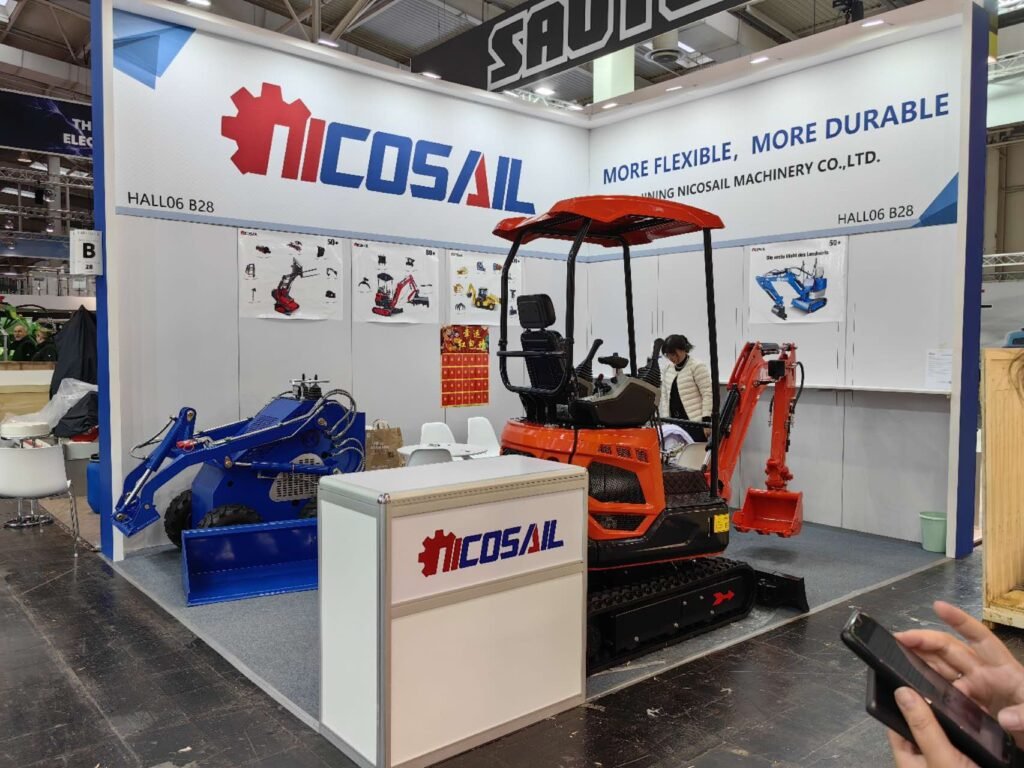
- Inspect the machine: Visit a dealer or trade show if possible. Check operator cabin, visibility, controls, build quality, track undercarriage.
- Check attachments & hydraulics: If you’ll use hammer, grab, auger, ensure auxiliary hydraulic circuits, quick-couplers are factory-fitted or fitted locally.
- Verify certification & documentation: As discussed above, check emissions, CE/EU or U.S. compliance.
- Service contract & parts plan: Negotiate support model, ask for parts list, ensure you know shipping times, local stock.
- Import/shipping/logistics: If importing direct from China, factor in shipping, duties (in USA or EU), customs clearance, local registration. Some brands have local warehouses which simplify this.
- Resale value & brand perception: If you plan to sell in 3–5 years, a well-known brand may hold value better. But if you plan to keep for 7–10 years, value matters less than reliability.
- Budget realistically: Price is important, but don’t compromise service network. A cheaper machine with poor support may cost more in total.
- Test locally or visit user sites: If possible, visit someone in your region who already uses the brand/model and ask about reliability, parts delays, real operating cost.
Future outlook for Chinese mini excavator brands beyond 2025
Looking ahead, here are some trends you should keep in mind when selecting a brand and machine:
- Electrification/Hybrids: As urban job-sites in Europe push for zero-emission or low-emission machines, mini excavators powered by battery or hybrid engines will gain traction. Chinese brands may have cost advantage here.
- Connectivity & telematics: Big brands are offering machine-monitoring, remote diagnostics, predictive maintenance. If the Chinese brand supports this, it’s a plus.
- Rental-model orientation: Many buyers rent machines rather than own. Brands tailored for rental durability (easy maintenance, standardised parts) will win.
- After-market parts ecosystem: Stronger support networks, local parts stock and localised modifications will differentiate winners. Chinese brands that invest in local warehouses, dealers will gain trust.
- Brand consolidation & local manufacturing: Some Chinese brands may set up KD (knock-down) assembly plants in Europe/USA to reduce duty/shipping costs and improve localisation. This will help perception and support.
- Focus on niche segments: Ultra-compact machines (0.8–1.5 ton) for landscaping, small-scale utility, and machine rental in tight urban Europe/USA may become growth areas. Chinese brands may dominate cost-effectively there.
So if you pick a Chinese mini excavator brand wisely now, you’re positioning for not just 2025, but for the evolving market to 2030.
FAQs
Q1: Are Chinese mini excavator brands reliable enough for the U.S. market?
A1: Yes—but it depends. Many Chinese brands now offer export-models with certified engines, attachments and service backing. The key is to choose a brand with local dealer network, parts availability, and proven local user feedback. Without that, reliability may suffer.
Q2: What size class should I consider when I say “mini excavator”?
A2: In Europe/USA markets “mini” often means machines roughly 1 to 5 tons operating weight (or ~1–3 t for very compact jobs). If you’re doing landscaping or utility work, 1–2 t might suffice. For heavier jobs or rental use 3–5 t gives more flexibility.
Q3: What emissions or certification standards do I need to check?
A3: In Europe, you’ll typically look for Stage V (or earlier Stage III) compliance, CE-marking, ROPS/OPG cabin/structure. In the U.S., look for EPA Tier ratings, and local dealer/import compliance. Make sure the machine is certified for your region.
Q4: Is it safe to buy a lesser-known Chinese brand (like Nicosail) instead of a big name?
A4: Yes—it can be a smart choice if you do your homework. The lesser-known brand may offer better value. But you must ensure service & parts support, certification, local references. The risk is a weaker service network and lower resale-value.
Q5: How important is the dealer/service network versus price?
A5: Very important. A slightly more expensive machine with strong parts/dealer support may cost you far less over its life than a cheaper machine that sits idle waiting for parts. For Europe/USA markets, service support is a key differentiator.
Q6: What kind of attachments should I look for in a mini excavator?
A6: Depending on your work, attachments might include hydraulic hammer, auger, tilt-bucket, grab, quick-coupler, boom swing, retractable undercarriage for narrow gates. Ensure the machine has auxiliary hydraulic circuits, standard coupler, and that the manufacturer supports these attachments.
Q7: What about resale value of Chinese brands in Europe/USA?
A7: Traditionally, resale value for Chinese brands has lagged those of established Japanese/European names. However, as parts/support improve, and as operators accept them for value, this gap is narrowing. Still, if resale is a major factor (e.g., rental yard), brand familiarity helps.
Conclusion
If you’re shopping for a mini excavator in Europe or America in 2025, Chinese brands are very much in the game—and in many cases, they offer compelling value. Brands like SANY, XCMG, Lonking, LiuGong have mature export networks and proven machines. Emerging names like Nicosail deserve a look too—especially if you’re value-driven and willing to evaluate service & parts carefully.
The key is: pick the machine that matches your job-site, check certification, ensure support & parts, understand total cost of ownership, and be realistic in terms of resale expectations and service network. With the right brand and model, you can get a reliable, cost-effective mini excavator suited for Europe/USA conditions—and be ready for the next 5-10 years of the market.