
1. Why Tracked Mini Dumpers Are So Popular Right Now
Tracked mini dumpers are everywhere now—construction sites, farms, gardens, rental yards, even inside greenhouses. The reason is simple:
they move material where wheelbarrows, skid steers, or trucks just can’t go.
For buyers sourcing from China, tracked mini dumpers look especially attractive because the price is competitive and configurations are flexible. But here’s the problem:
many buyers focus only on price and payload, and ignore gradient and dump angle.
That’s where most regrets start.
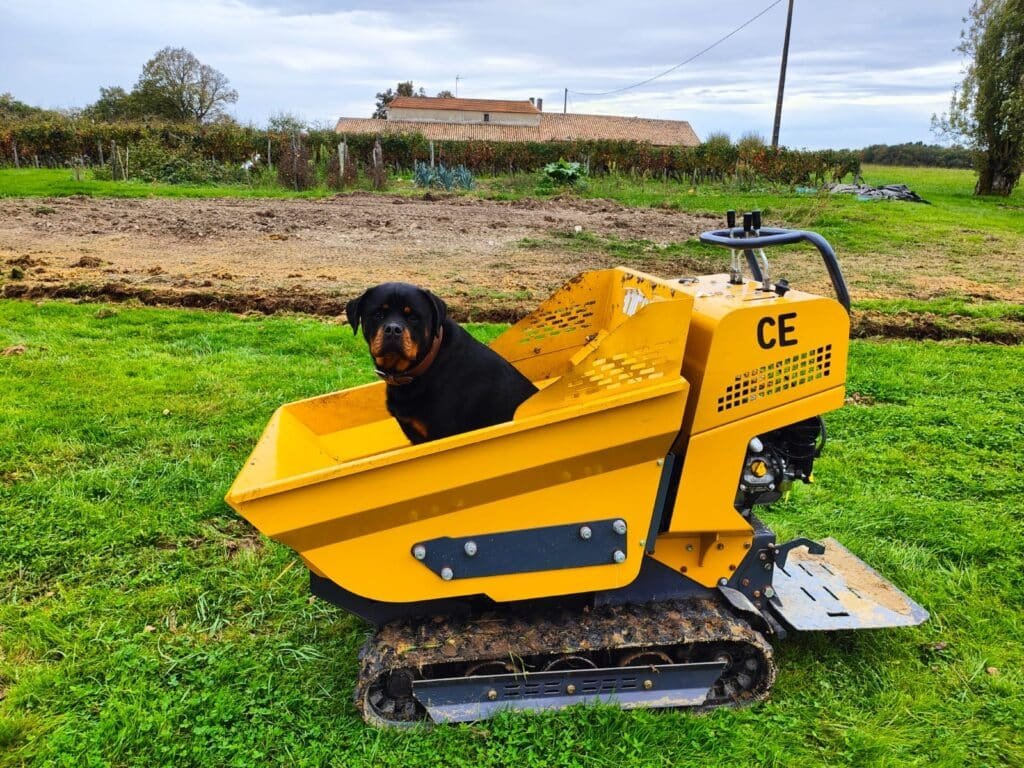
2. What “Payload” Really Means (And Why Many Buyers Get It Wrong)
Rated Load vs Real Working Load
When a Chinese factory says “500 kg payload”, that number is usually tested on:
- flat concrete ground
- low speed
- evenly distributed load
In real life, the machine is often:
- climbing a slope
- turning
- dumping to one side
- working on mud, gravel, or sand
Practical rule:
👉 Real working payload is usually 70–80% of the rated payload if the jobsite is not flat.
So a 500 kg dumper is happiest carrying around 350–400 kg all day long without stressing the hydraulics or tracks.
Payload vs Machine Weight
Another mistake: assuming “bigger payload is always better.”
A heavier payload means:
- stronger frame
- bigger hydraulic pump
- wider tracks
- more engine power
If these don’t scale together, the dumper may:
- struggle uphill
- slip on slopes
- wear tracks very fast
Reliable factories (like Nicosail) usually balance payload with track width and pump size, instead of just printing a big number on the nameplate.
3. Gradient Explained: How Steep Is “Too Steep”?
Advertised Gradeability vs Real Jobsite Slopes
Many spec sheets say:
“Maximum gradient: 30°” or “35°”
That sounds impressive—but it’s theoretical maximum, often tested with:
- no load
- straight uphill
- dry surface
In real work, safe gradients are lower.
Practical safe gradient (loaded):
- 15–20° for continuous work
- 25° only for short, careful moves
If a buyer plans to work on vineyards, hillsides, or basement ramps, this matters a lot.
Safety Margins on Slopes
On slopes, three things fight gravity:
- Track grip
- Machine balance
- Hydraulic drive torque
Once payload is added, the center of gravity moves up and forward. That’s why experienced operators reduce load on slopes—even if the dumper can carry more.
Good Chinese factories design:
- lower engine position
- longer track contact length
- reinforced undercarriage
These details don’t show up in brochures—but they decide whether a machine feels “stable” or “scary” on a hill.

4. Dump Angles: Small Detail, Big Difference
Standard Dump vs High Dump
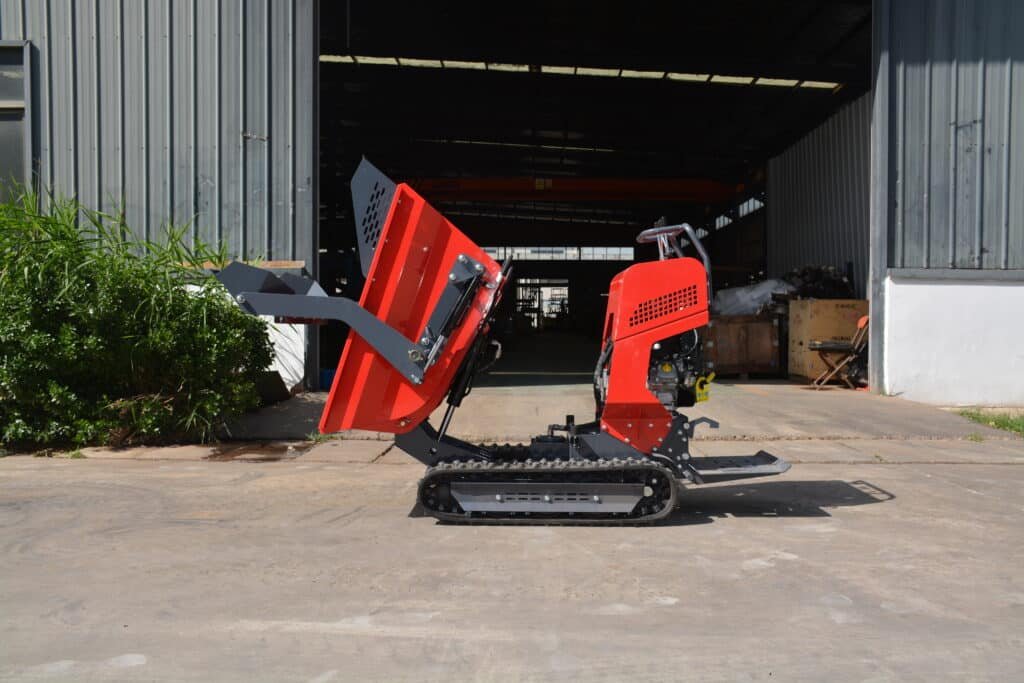
Most tracked mini dumpers offer:
- Standard dump angle: 45–60°
- High dump option: 90°+ with lifting arms
A bigger dump angle means:
- sticky clay slides out easier
- less manual shoveling
- faster cycle times
For rental companies, dump angle matters more than expected—operators hate machines that don’t empty cleanly.
How Dump Angle Affects Efficiency
On farms and landscaping jobs, material is often wet:
- soil
- compost
- manure
With a shallow dump angle, material sticks. Operators shake the machine, stress the hydraulics, and complain.
Factories that focus on real use cases tune the hydraulic cylinder stroke so the bucket reaches a true tipping point, not just a “looks good on paper” angle.
5. How Payload, Gradient, and Dump Angle Work Together
These three specs are connected. Increasing one usually stresses the others.
Example:
- Bigger payload → higher center of gravity
- Higher center of gravity → reduced slope safety
- Steeper dump angle → stronger hydraulic force needed
That’s why experienced buyers don’t chase extreme specs.
They look for balance, not maximum numbers.
6. Typical Chinese Tracked Mini Dumper Configurations
Most buyers from Europe, North America, and Australia choose within these ranges:
- Payload: 300–800 kg
- Engine: 6.5–13 HP gasoline or small diesel
- Gradient: advertised 25–35°, real use 15–20°
- Dump angle: 50–60° standard, 90° optional
Brands like Nicosail usually customize track width, hopper size, and dump height depending on whether the machine is for farming, construction, or rental use.
7. Common Buying Mistakes (Seen Too Many Times at the Factory)
- Choosing maximum payload for a small engine
- Ignoring slope conditions at real jobsites
- Ordering cheap steel tracks for rocky terrain
- Not testing dump performance with wet material
- Believing brochure numbers without load testing
These mistakes don’t show up in the first month—but they show up after one season.
8. How Reliable Chinese Factories Design Around These Limits
Good factories focus on:
- hydraulic matching (pump + motor + cylinder)
- frame stress points around the dump hinge
- track tension stability under load
- real slope testing, not just calculations
This is why some Chinese machines feel “solid” while others feel unstable—even with similar specs on paper.
9. Who Should Choose Which Specification? (Quick Guide)
- Landscaping & gardens:
- 300–500 kg payload
- emphasis on dump angle
- Farms & muddy fields:
- wider tracks
- moderate payload
- Construction & rental:
- balanced payload + stability
- easy maintenance design
Choosing the right combination saves money long-term—not just at purchase.
10. FAQs Buyers Always Ask
Q1: Is a higher payload always better?
No. Too much payload without matching engine and hydraulics causes early wear.
Q2: Can the dumper really climb the advertised slope?
Yes—but usually without load. With load, stay conservative.
Q3: Is high dump worth the extra cost?
For rental and landscaping, yes. For simple transport, standard dump is fine.
Q4: Are Chinese tracked dumpers reliable?
They can be, if the factory focuses on balance and testing—not just low price.
11. Final Summary: Buying the Right Machine Without Regret
Payload, gradient, and dump angle look like simple numbers—but they define how a tracked mini dumper behaves every single day on site.
Smart buyers don’t chase extremes.
They choose machines that are balanced, stable, and easy to operate.
Chinese manufacturers like Nicosail have become popular not because of flashy specs, but because they design machines around real-world use—mud, slopes, wet soil, and long working days.
Understand these three parameters clearly, and choosing the right tracked mini dumper becomes much easier—and much safer.