
1. Why Mini Dumpers Are Everywhere in 2026
On construction sites, farms, gardens, and landscape projects, one thing is clear: labor is expensive, space is tight, and time is short.
That’s why mini dumpers are selling faster than small trucks in many regions.
Instead of:
- Two or three workers with wheelbarrows
- A pickup that can’t reach the backyard
- A loader that tears up finished grass
Contractors are using compact dumpers that fit through gates, climb slopes, and dump material in seconds.
And yes—most of them now come from China.
2. What Exactly Is a Chinese Mini Dumper?
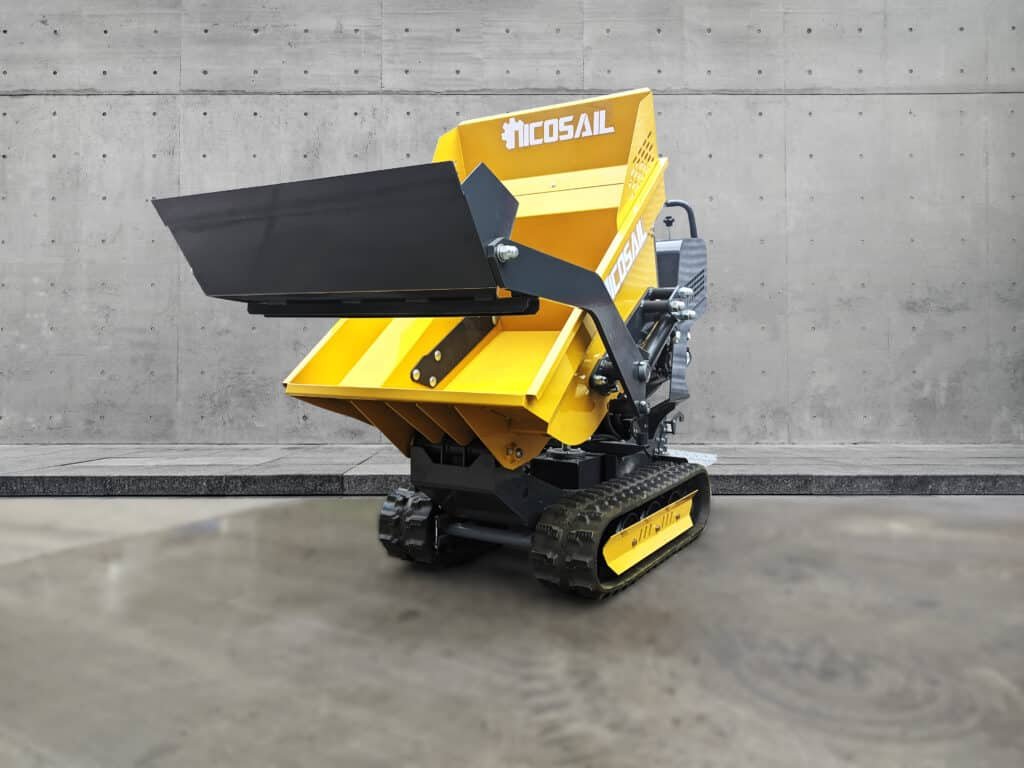
A Chinese mini dumper is a compact material transport machine manufactured in China, usually with:
- Payloads from 300 kg to 1200 kg
- Gasoline or diesel engines
- Manual or hydraulic tipping
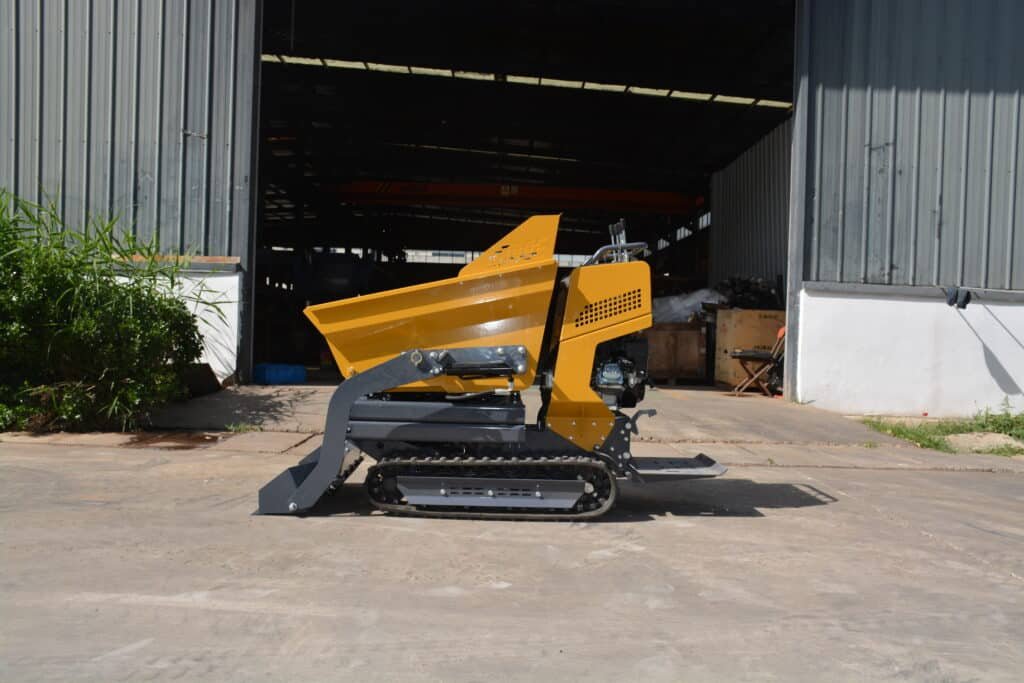
- Wheel or rubber track undercarriage
They are used for:
- Soil, gravel, sand
- Concrete, debris, waste
- Firewood, feed, fertilizer
In simple words:
It’s a powered wheelbarrow that actually works all day without breaking your back.
3. Who Should Buy One (and Who Shouldn’t)
Ideal Buyers
This guide is written mainly for Contractors & Landscapers, including:
- Landscaping companies
- Small construction contractors
- Masonry and concrete teams
- Property maintenance crews
- Farm and estate owners
If jobs include tight access, soft ground, or frequent material handling, a mini dumper makes sense.
Who Shouldn’t
A mini dumper is not ideal if:
- Jobs are always long-distance hauling
- Payloads exceed 2–3 tons regularly
- Sites are wide open with truck access
In those cases, small dump trucks or loaders make more sense.
4. Wheel vs Tracked Mini Dumpers: Which Fits Your Jobsite
This is one of the first decisions buyers regret getting wrong.
Wheeled Mini Dumpers
Best for:
- Hard ground
- Pavement and concrete
- Flat landscapes
Pros:
- Faster travel speed
- Lower cost
- Easier maintenance
Cons:
- Less grip on slopes
- Can sink on soft soil
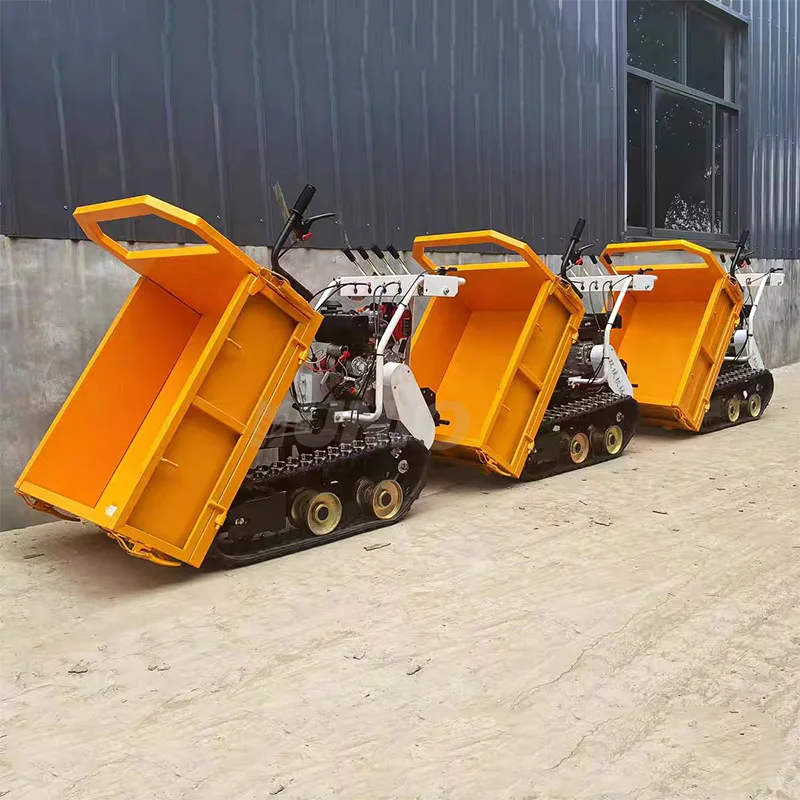
Tracked Mini Dumpers
Best for:
- Mud, sand, grass
- Slopes and uneven ground
- Landscaping and agriculture
Pros:
- Excellent traction
- Lower ground pressure
- Stable with heavy loads
Cons:
- Slightly higher price
- Tracks need periodic tension adjustment
Simple rule:
If work touches grass, mud, or slopes → tracked dumper wins.
5. Payload, Engine, and Drive System: What Really Matters
Payload Isn’t Just a Number
A “500 kg dumper” should:
- Carry 500 kg all day
- Not overheat
- Not twist the frame
Cheap models survive the first demo, then fail after months.
Engine Choice (Keep It Simple)
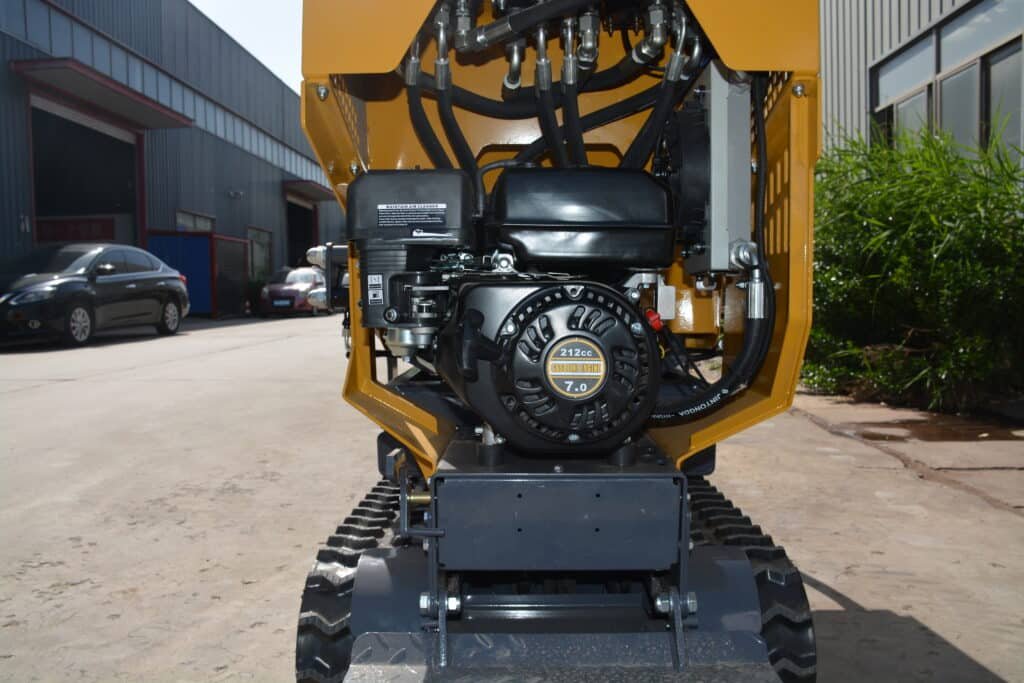
Most Chinese mini dumpers use:
- Gasoline engines (easy start, cheaper)
- Small diesel engines (torque, fuel economy)
What matters more than brand:
- Stable idle
- Easy cold start
- Readily available spare parts
Avoid rare or unbranded engines with no parts supply.
Drive System
Better machines use:
- Direct gearbox or hydraulic drive
- Reinforced axles
- Steel gear housings
Weak points usually show up under full load on slopes.
6. Hydraulic System: The Part Most Buyers Overlook
This is where cheap dumpers quietly fail.
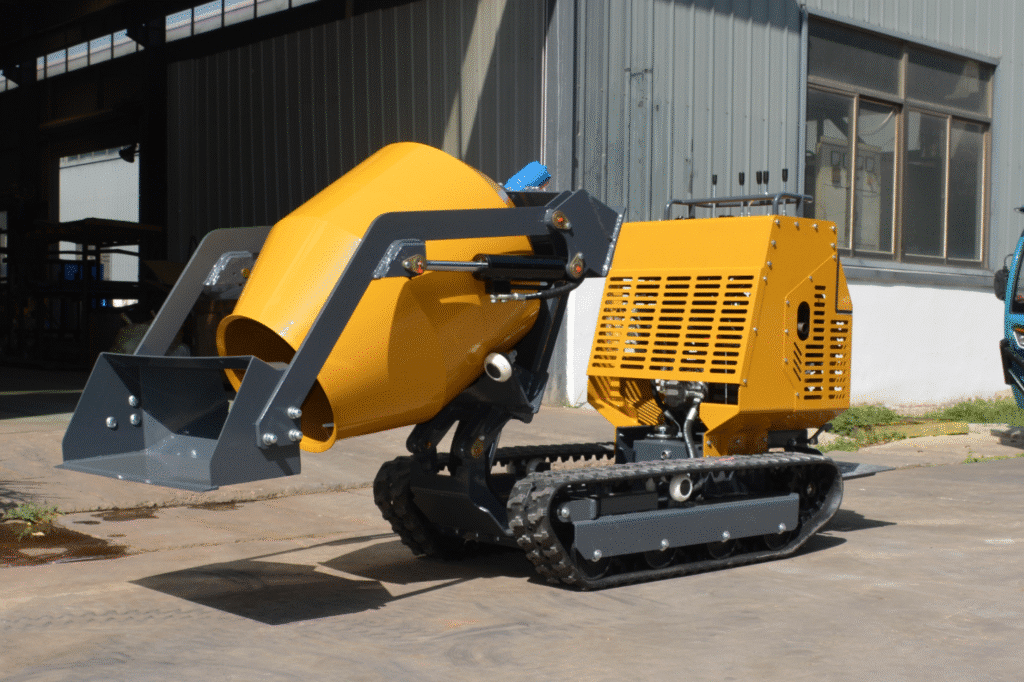
Key areas to check:
- Hose quality (cracking = leaks)
- Cylinder wall thickness
- Pump brand consistency
A weak hydraulic system leads to:
- Slow tipping
- Jerky movement
- Oil leaks after 6–12 months
Good factories pressure-test every unit before shipment. Many don’t.
7. Common Quality Myths About Chinese Mini Dumpers
Myth 1: “All Chinese dumpers are the same”
Reality:
China has hundreds of factories. Some build machines that last 8 years. Some last 8 months.
Myth 2: “Photos tell the quality”
Reality:
Paint hides:
- Thin steel
- Poor welding
- Weak frames
Myth 3: “Lowest price saves money”
Reality:
Downtime costs more than machine price.
8. Real Factory-Level Differences You Can’t See in Photos
From factory-floor comparisons, the biggest differences are:
- Steel sourcing (recycled vs certified)
- Welding process (manual rush vs jig-controlled)
- Final testing (none vs load & slope tests)
Reliable factories test:
- Full-load climbing
- Emergency stop
- Hydraulic leak pressure
This “invisible work” is what separates usable machines from headaches.
9. Certifications, Compliance, and Export Reality in 2026
For Europe, North America, and Australia, buyers should confirm:
- CE conformity
- Emission compliance (where required)
- Machine serial traceability
Certificate fraud still exists in 2026.
Always verify:
- Factory name matches certificate
- Model number consistency
10. How Contractors and Landscapers Actually Use Them
Typical daily tasks:
- Moving soil from backyard to skip
- Feeding mixers with sand
- Clearing demolition debris
- Transporting plants and stone
One mini dumper can replace:
- 2–3 laborers
- Multiple wheelbarrows
- One exhausted foreman
11. Ownership Costs: Fuel, Maintenance, and Parts
Fuel
Mini dumpers are light on fuel:
- Gasoline models: very economical
- Diesel models: even better under load
Maintenance
Basic routine:
- Oil change
- Greasing
- Track tension check (tracked models)
Parts
Good suppliers use:
- Standard bearings
- Common belts
- Universal hoses
Avoid machines requiring factory-only parts.
12. How to Choose a Reliable Chinese Supplier
Ask these questions:
- Do they have their own production line?
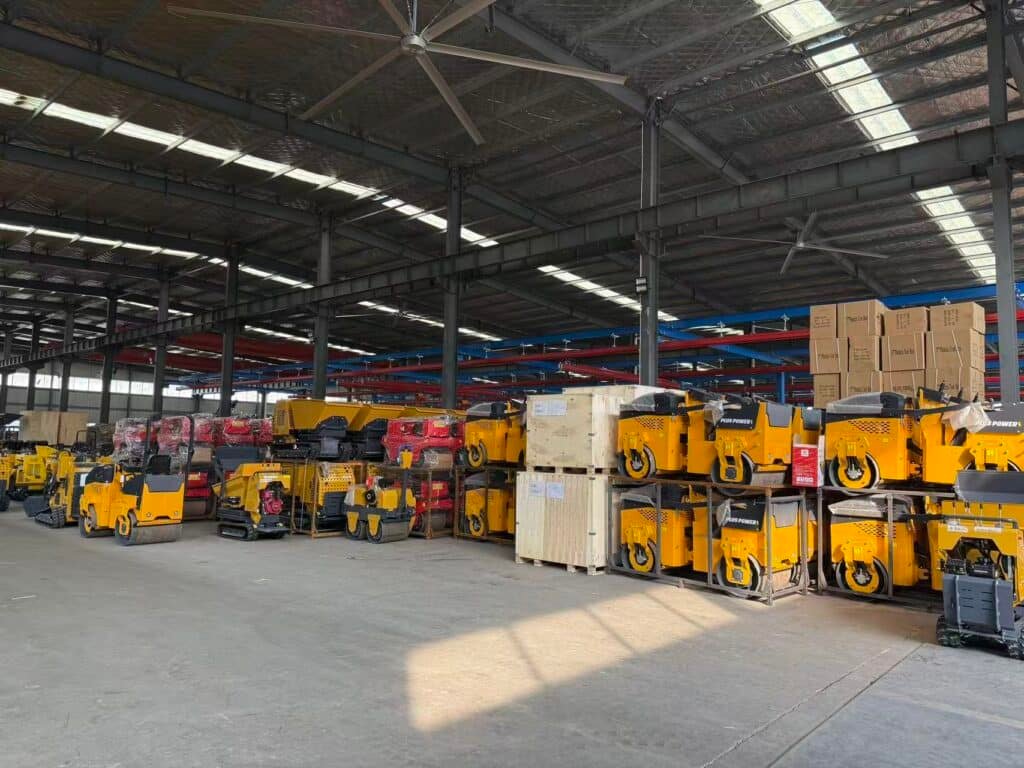
- Can they show testing videos, not just photos?
- Are spare parts stocked for export markets?
- Can machines be customized without delays?
Suppliers who answer clearly are usually safer.
13. Where Nicosail Fits
Some buyers choose Nicosail because:
- Machines are built for export markets, not domestic shortcuts
- Configuration options match European and North American use
- Factory processes focus on long-term reliability
It’s not about flashy specs—it’s about machines that don’t come back with complaints.
14. Buying Checklist Before You Pay a Deposit
Before sending money:
- Confirm payload under real conditions
- Ask for hydraulic system details
- Verify certification authenticity
- Check spare parts policy
- Confirm packaging for long-distance shipping
This checklist avoids 80% of common problems.
15. Frequently Asked Questions (FAQ)
Q: Are Chinese mini dumpers reliable?
Yes—if sourced from a factory that builds for export and tests machines properly.
Q: Tracked or wheeled for landscaping?
Tracked. Less ground damage, better stability.
Q: What payload is best for contractors?
500–800 kg covers most daily tasks without oversizing.
Q: How long do they last?
With basic maintenance, good units run 5–8 years in normal use.
Q: Are spare parts hard to get?
Not if the supplier uses standard components.
16. Final Summary: Buy Smart, Work Easier
A Chinese mini dumper in 2026 is no longer a “cheap alternative.”
It’s a practical, efficient tool when chosen correctly.
The key is not chasing the lowest price—but understanding:
- Jobsite conditions
- Payload reality
- Factory quality
When those match, a mini dumper doesn’t just move material.
It moves the whole project faster, cheaper, and with fewer headaches.
For contractors and landscapers, that’s what really matters.