Reputation cost if failure rate is high in peak season
3) Performance: Where Japanese Machines Usually Pull Ahead
Using the Yanmar C30R class as a reference: payload 2,500 kg, compact width ~1.55 m, built for tight job sites and heavy hauling.
In real use, Japanese machines tend to win on:
A) Hydraulics that stay consistent all day
Micro dumpers can feel fine empty, then struggle loaded, especially on slopes or uneven ground. Heavier Japanese carriers typically hold performance because the pump sizing, valve quality, and hose routing are designed for continuous duty.
B) Track system and undercarriage life
For tracked machines, the undercarriage is the “hidden bill.”
Japanese carriers usually use stronger rollers/idlers, better sealing, and tighter track alignment
Result: fewer de-tracking events, longer life, less rental downtime
C) Operator control and productivity
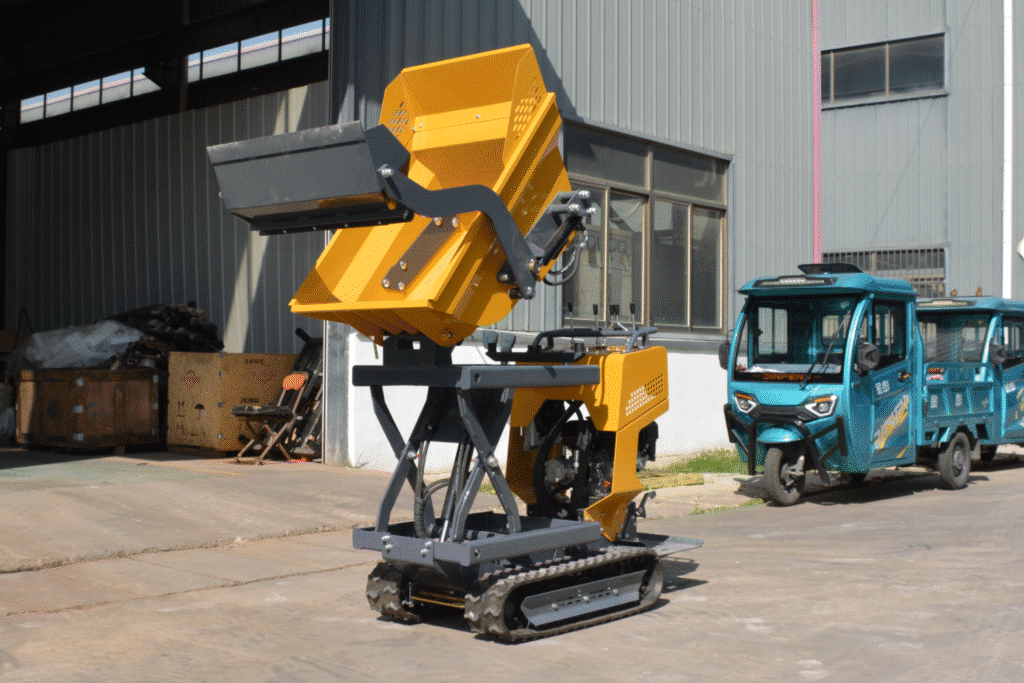
A swivel dump carrier can save real time because it dumps without repositioning. Example: the C30R-3 comes in 1-way or swivel configurations (dealer listings commonly price swivel higher).
D) Payload honesty + stability
A 500 kg micro dumper is great—until someone loads it like a 1-ton machine. Japanese carriers are built around heavier loads and safer stability margins.
4) Reliability: The “Invisible Parts” That Decide Uptime
This is where ROI is won or lost—especially for rental fleets and contractors.
What fails first on lower-cost machines (common patterns)
Not “big iron” like the frame. The killers are small things:
Wiring connectors and routing (water ingress, vibration rub points)
Below are plain-language ROI models that buyers actually use. Adjust numbers to local labor rates and utilization.
Model 1: Contractor (daily hauling on job sites)
Assumptions:
The dumper replaces 1 laborer doing wheelbarrow runs part of the day
Labor cost (loaded): $25/hour
Productivity gain: 2 hours/day saved
Working days: 18 days/month
Monthly value created
2 hr/day × $25 × 18 = $900/month
Now compare:
Option A — Micro dumper (≈$3k–$6k class in many markets)
Payback can be 3–7 months if used consistently
Risk: if it can’t handle real site abuse, downtime and repairs stretch payback fast
Option B — Japanese tracked carrier (≈$69k–$79k new for C30R-3 class)
$900/month savings alone won’t justify it quickly
But this machine is usually bought because it enables:
heavier hauling
fewer machines on site
fewer delivery handling steps
reliable daily production
high resale value
Bottom line:
If the job is “move material faster sometimes,” micro dumper wins.
If the job is “material hauling is the backbone of the site plan,” the carrier wins.
Model 2: Rental Fleet (uptime + reputation beats sticker price)
Assumptions:
Rental rate: $250/day (example)
Utilization: 10 days/month
Revenue: $2,500/month
Now apply uptime:
If a low-cost unit loses 3 rental days/month due to issues, revenue drops $750/month
If a Japanese unit loses 0–1 days/month, revenue stays stable
That difference alone can exceed the monthly finance cost in many cases.
Also: renters punish weak machines:
Bent beds, broken levers, track problems, and “it doesn’t start” calls.
Model 3: Farm / landscaping (seasonal but predictable)
Assumptions:
Use spikes in spring/autumn
Priority is easy start, low maintenance, simple parts
In this world, a micro dumper often makes perfect sense if:
parts are available locally
engine and hydraulics are proven
the dealer actually stocks wear parts (tracks, rollers, cables)
6) Resale Value: The Quiet ROI Multiplier
Japanese machines often keep value because:
Brand trust
Established used market demand
More consistent parts support
Even public listing platforms show a wide used pricing band for machines like Yanmar C30R-3 depending on hours/condition, which is a sign of an active used market.
Resale matters because many buyers don’t “own forever.” They rotate fleets every few years.
7) When Chinese Mini Dumpers Are the Smarter Buy
Chinese-sourced micro dumpers are often the best choice when:
Payload needs are under 500–800 kg
The machine runs a few hours at a time, not full-day production
You have a local parts channel (or you can stock a basic spares kit)
The real goal is replacing wheelbarrows, not replacing a hauling system
You want fast payback and can accept more basic comfort and finish
A lot of EU/UK retail pricing for 500 kg class machines lands in the “few thousand” range, which is exactly why these machines sell so well for gardens, farms, and light contracting.
8) When Japanese Mini Dumpers Are the Smarter Buy
Japanese tracked carriers make more sense when:
Material hauling is daily, not occasional
The jobsite is rough: mud, slopes, long travel paths
Downtime costs are high (crew waiting, rentals canceled)
You need 2+ ton payload and stability
You care about long service life + resale
A clear reference point: the Yanmar C30R platform is built around 2,500 kg payload in compact dimensions for tight sites.
9) How to Buy Chinese Without Getting Burned (factory checklist)
For importers/distributors (and any buyer doing volume), this checklist prevents 80% of regrets:
A) Ask for the “3 photos” that reveal build truth
Inside the engine bay (wiring, hose routing, clamps)
Under the bed (hydraulic cylinder mounts, weld finish)
Track tension area (idler mount, grease points, guard design)
B) Demand a real QC flow, not a brochure
A serious factory can show:
incoming inspection (steel, bearings, hoses)
torque check points
hydraulic leak test
run-in test (hot oil), not just “start it once”
C) Standardize on service parts
Before ordering, confirm:
track model and lead time
rollers/idlers part numbers
throttle cable spec
hydraulic filter spec
seal kit availability
D) Plan your spares kit (cheap insurance)
For every 10–20 micro dumpers shipped:
1 set tracks (or at least track links if modular)
throttle cables
key switches / relays
hydraulic hoses that commonly rub
filter sets
This is how distributors protect peak season.
10) Where Nicosail Fits (without the marketing fluff)
For buyers who like Chinese pricing but want fewer “Chinese headaches,” the supplier matters more than the country.
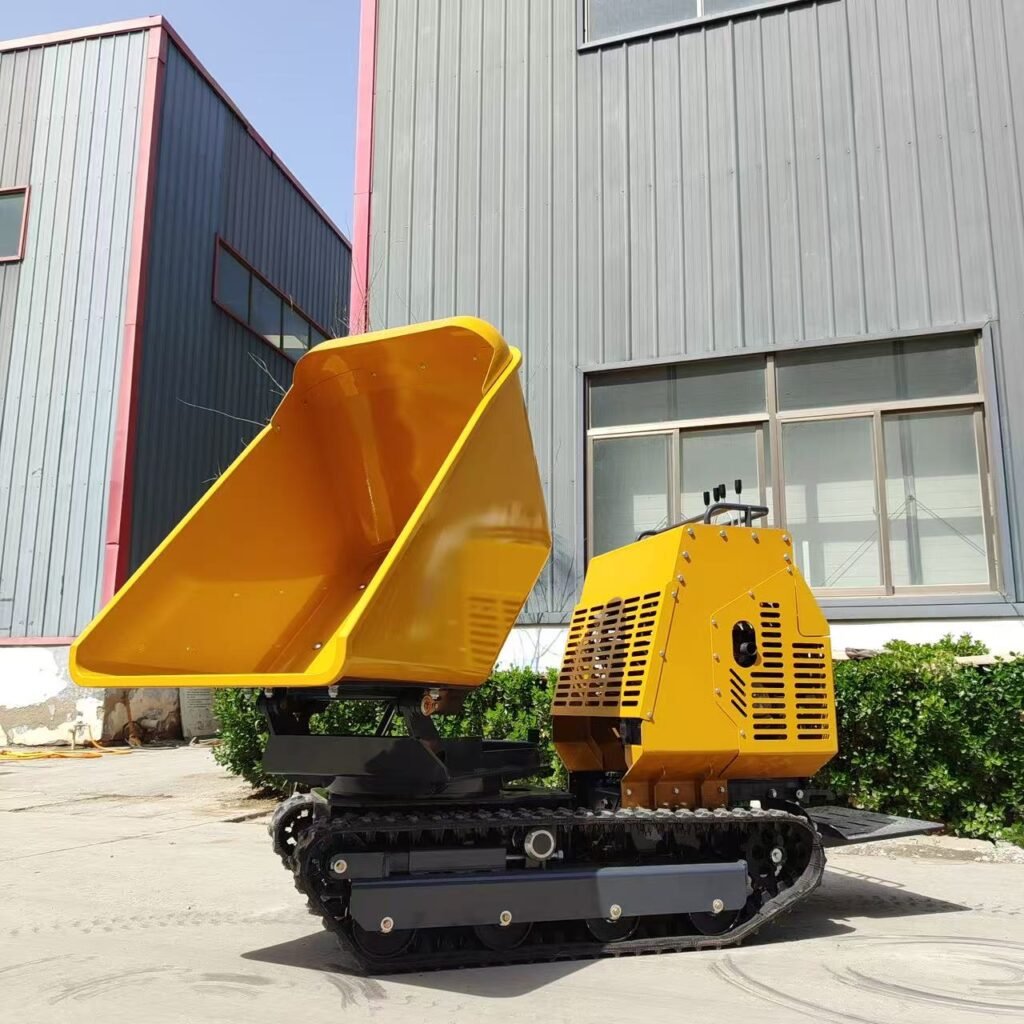
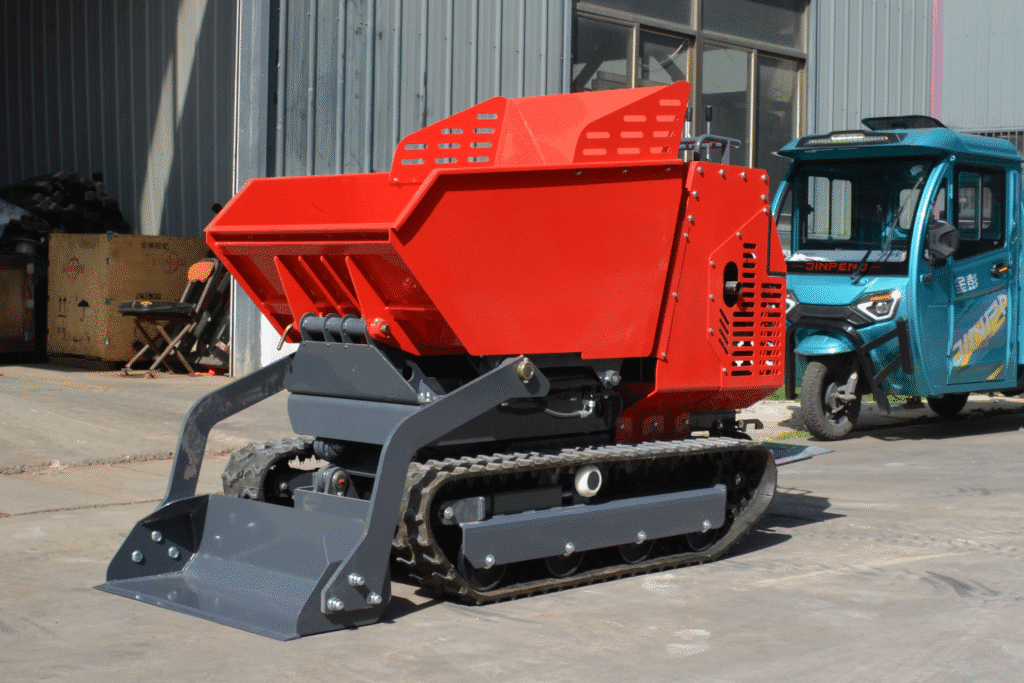
Nicosail is positioned as a factory supplier (5 production lines) focused on compact equipment like mini excavators, compact tracked loaders, skid steers—and the same manufacturing discipline applies when building small carriers/dumpers: consistent welding jigs, repeatable hose routing standards, and controlled incoming inspection.
What typically helps buyers most (especially B2B importers) is not fancy features—it’s boring stability:
consistent parts spec (so aftersales is predictable)
honest certification handling
clear communication during production and shipping windows
options for customizable outlook for rebranding without changing core structure
That’s the practical “middle path” many distributors want: competitive landed cost without gambling on reliability.
FAQ
1) Are Japanese mini dumpers always “better”?
Not always. For light work (gardens, farms, occasional contracting), a micro dumper can generate faster payback because the price is low. But for daily heavy hauling and rental fleets, Japanese carriers often win because uptime and resale value dominate ROI.
2) Why is the price gap so huge?
Because many comparisons mix categories: a 500 kg micro dumper vs a 2.5 ton tracked carrier isn’t the same product. A carrier like the Yanmar C30R-3 is built around 2,500 kg payload and heavy-duty systems.
3) What’s a realistic new price for a Japanese tracked carrier?
Public dealer listings show new Yanmar C30R-3 pricing around $69k–$79k depending on configuration. Used pricing varies widely by hours/condition.
4) What’s a realistic price for a 500 kg class micro tracked dumper?
Retail listings in Europe/UK commonly show ~£1,900–£2,500 depending on model, tax, and promotions.
5) For a distributor, what’s the #1 risk with cheap machines?
After-sales chaos: parts mismatch, inconsistent build batches, and peak-season downtime. The cure is supplier discipline (standard parts + documented QC) and stocking a small spares kit.
6) Which features matter most for ROI?
In order:
Uptime (hydraulics + undercarriage)
Parts availability
Payload honesty/stability
Dump style (swivel can save time)
Resale value
Summary
“Chinese vs Japanese mini dumper” only makes sense after defining the class: micro dumper (300–800 kg) vs tracked carrier (1.5–3+ tons).
Chinese-sourced micro dumpers can deliver very fast payback when usage is light-to-moderate and parts support is planned.
Japanese tracked carriers justify their higher price when hauling is a daily production task, downtime is expensive, and resale value matters.
The smartest buyers don’t buy a country—they buy a reliable build system: consistent parts, real QC, and predictable aftersales. That’s where suppliers like Nicosail can help buyers get “value pricing” without turning the purchase into a reliability gamble.
Ask For A Quick Quote
We will contact you within 1 working day, please pay attention to the email with the suffix “@nicosail.com”.
Note: Your personal information will be kept strictly confidential.