Importing a Chinese mini dumper can be very profitable — if the customs, HS code, and Incoterms are handled correctly. Get any of these wrong, and margins disappear in unexpected duties, storage fees, or delays at the port.
This guide is written for distributors, rental companies, contractors, and farm equipment dealers who want to import mini dumpers from China safely and legally, without nasty surprises.
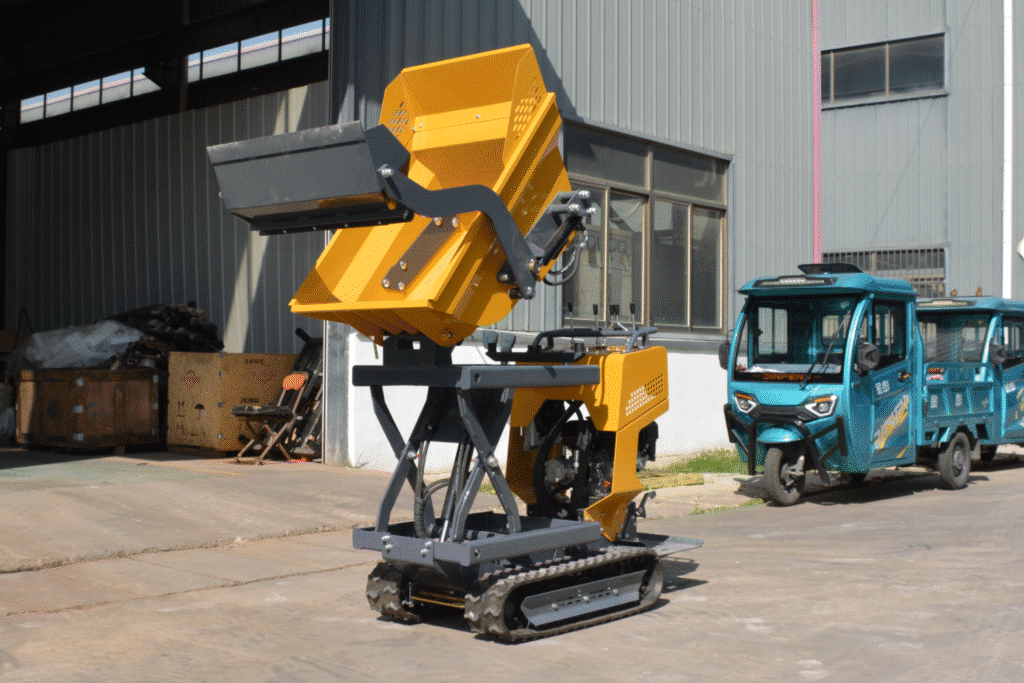
What Exactly Is a “Mini Dumper” in Customs Terms?
In daily language, “mini dumper” can mean many things:
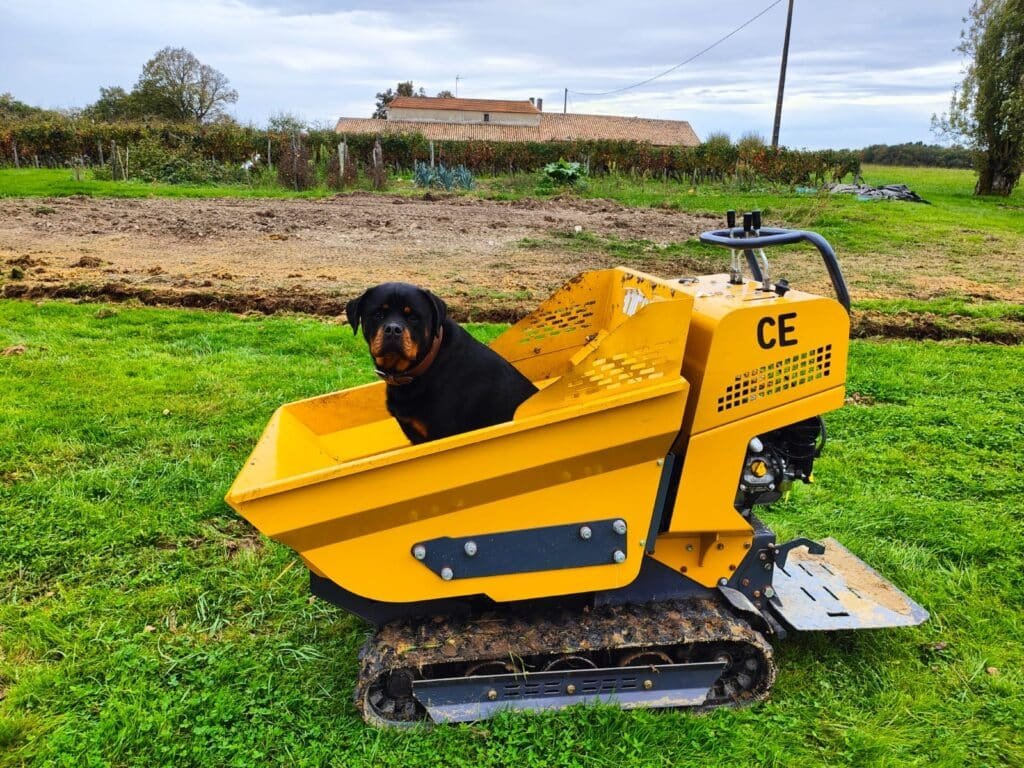
- A small tracked dumper following an excavator on a job site
- A garden dumper for landscaping jobs
- A small articulated site dumper with a swivel bucket
But customs doesn’t care about marketing names. For HS code and duties, customs mainly looks at:
- Is it designed for off-highway use?
- Is it self-propelled? (engine or motor)
- Is it for transporting goods, not lifting them?
- Can it legally drive on public roads or is it a site-only machine?
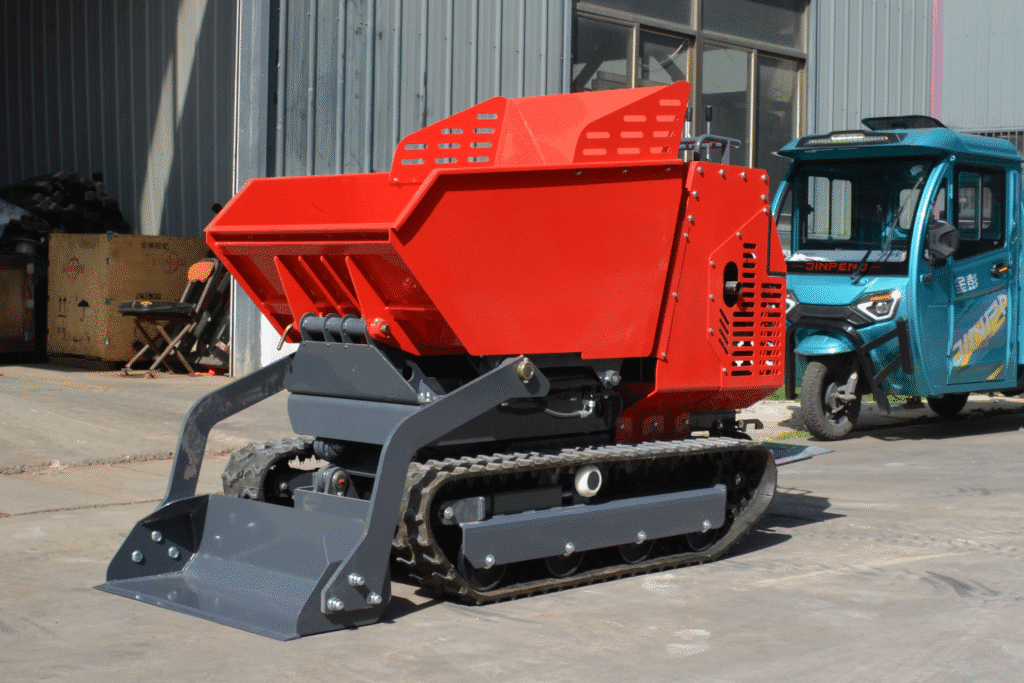
Most construction-type mini dumpers from Chinese factories are:
- Off-road machines for site or farm use
- Self-propelled (diesel, gasoline, or electric)
- With a front bucket or skip that tips to unload
These details decide the HS code and, therefore, import duty.
Factories like Nicosail, which produce mini excavators and compact machinery, usually build mini dumpers as off-highway site machines, not road trucks. That puts them in the same family as off-highway dumpers rather than highway tipper trucks, in most customs systems.
Finding the Right HS Code for a Chinese Mini Dumper
2.1 Typical HS Code for Off-Highway Dumpers
Globally, dump trucks and dumpers “designed for off-highway use” are usually classified under HS heading 8704 – Motor vehicles for the transport of goods, and more specifically:
HS 8704.10 – Dumpers designed for off-highway use
Examples from common tariff databases:
- EU Combined Nomenclature: 87041010 / 87041090 for off-highway dumpers, including those with diesel or spark-ignition engines.
- US HTS: 8704.10.10 – Dumpers designed for off-highway use.
So for many off-road mini dumpers used in construction, farms, and gardens, the likely HS code series is 8704.10.xx.
However, this is not guaranteed. Customs looks at technical features, weight, and use case, not what the brochure says. Always treat HS code as something that must be agreed and confirmed, not simply copied.
2.2 When the HS Code Might Be Different
Some mini dumpers are closer to works trucks or warehouse vehicles than construction dumpers. In such cases, customs may consider:
- HS 8709 – Works trucks, self-propelled, not fitted with lifting or handling equipment
- Or potentially some subheadings around self-propelled works trucks and low-lift equipment (e.g. 8427 for some types of works trucks with lifting).
A reclassification can change duty rates and possibly safety/road regulations.
Red flags that your mini dumper might not be 8704.10:
- Designed mainly for indoor use in warehouses
- Very small electric platform trucks with low ground clearance
- Clearly marketed as works truck rather than construction dumper
- Fitted with special handling equipment or high-lift structures
If the product looks like a construction site dumper and is marketed with excavators and compact loaders, 8704.10 is usually the starting point, but always check.
2.3 How to Confirm HS Code with Your Customs Broker
To avoid future disputes, use this simple process:
- Collect tech data from the supplier:
- Detailed spec sheet (engine, power, weight, payload)
- Photos from all sides
- Use description: “off-highway dumper for construction/farm use”
- User manual (if available)
- Ask the supplier which HS code they usually use for export.
Serious factories like Nicosail often ship the same product to EU, North America, and Australia and already know which HS code brokers are using in those markets. - Send everything to a customs broker in your own country.
Ask them:- “For this machine, what HS code is recommended for import into [your country]?”
- “What is the duty rate and any extra taxes (anti-dumping, environmental, etc.)?”
- Get it in writing (e-mail at least).
If customs questions the HS code later, written advice from a licensed broker is very helpful.
Incoterms 2020 for Mini Dumper Imports: Who Pays What?
3.1 The Most Used Terms for Machinery from China
For importing mini dumpers from China, the usual Incoterms are:
- EXW – Ex Works
- FOB – Free On Board (port of loading)
- CIF – Cost, Insurance and Freight
- CFR – Cost and Freight
- DAP – Delivered At Place
- DDP – Delivered Duty Paid
Newer terms like DPU exist but are less common in heavy machinery imports.
These Incoterms only define who pays for which part of the logistics and where the risk transfers. They do not define ownership or payment terms.
3.2 EXW vs FOB vs CIF vs DAP vs DDP (Plain English)
Here is a simplified view for mini dumper imports:
| Term | Seller Does | Buyer Does | Risk Transfer Point |
|---|---|---|---|
| EXW (Ex Works) | Puts machine at factory gate, ready for pickup | All trucking in China, export customs, sea freight, insurance, import clearance, inland delivery | When goods are made available at factory gate |
| FOB (Free On Board) | Inland trucking to port, export customs in China, loads on vessel | Sea freight, insurance, destination charges, import clearance, domestic transport | When goods are loaded on the vessel at Chinese port |
| CFR (Cost & Freight) | Same as FOB + pays sea freight to destination port | Insurance, destination charges, import clearance, domestic transport | Once goods are on vessel at loading port |
| CIF (Cost, Insurance & Freight) | Same as CFR + minimum marine insurance | Destination port charges, import clearance, domestic transport | Once goods are on vessel at loading port |
| DAP (Delivered At Place) | All freight to agreed destination (e.g. your yard/warehouse), export customs | Import customs clearance, duties & taxes | When goods are ready for unloading at destination |
| DDP (Delivered Duty Paid) | Everything: export, international freight, import clearance, duties, taxes, local delivery | Basically just receive the goods | When goods are delivered to your premises |
Under EXW, the buyer is even responsible for export customs clearance in China, which can be risky if the buyer has no presence or agent there. Under DDP, the seller handles both export and import customs (including duties), which looks attractive but often hides unclear local fees.
3.3 Which Incoterms Work Best for First-Time Importers
For mini dumpers and similar machinery, many experienced importers choose:
- FOB port in China + use their own freight forwarder
- Or CIF when they want the supplier to book sea freight but still control destination handling
Why FOB or CIF is usually safer than EXW:
- Export customs in China are handled by the supplier or its agent
- Factory knows local trucking, loading, and documentation requirements
- Buyer focuses on what really matters: shipping options, insurance level, and destination port costs
When DAP makes sense:
- Buyer wants a “door-to-door” solution but still prefers to control duties and taxes personally
- Useful if the importer has no strong logistics partners but wants transparent tax handling in their own name
DDP should be used carefully:
- In some countries, suppliers are not even allowed to act as importer of record
- Duties and VAT are often bundled into one price, making it hard to check if everything is correctly declared
- If something goes wrong at customs, the importer sometimes has less control
Reputable manufacturers like Nicosail often support FOB or CIF terms and coordinate smoothly with the buyer’s forwarder, which gives a good balance between cost control and risk management.
Customs Documentation: What Paperwork Is Really Needed?
4.1 Core Shipping Documents
Most countries require similar basic documents for importing machinery like mini dumpers:
- Commercial Invoice
- Seller and buyer full details
- HS code (e.g. 87041010, depending on your country’s system)
- Description: “Off-highway self-propelled mini dumper”
- Unit price and total price
- Currency and payment terms
- Incoterm and named place (e.g. FOB Qingdao, CIF Hamburg)
- Packing List
- Number of packages/crates
- Gross weight and net weight
- Dimensions of each package
- Marks and numbers (e.g. crate IDs, model codes)
- Bill of Lading (B/L) or Sea Waybill
- Issued by the carrier or freight forwarder
- Shows shipper, consignee, notify party, port of loading, port of discharge
- Required for import clearance and often for payment if L/C is used
- Insurance Policy or Certificate (for CIF or if buyer insures separately)
- Needed if there is a claim for damage during transport
- Certificate of Origin (sometimes required)
- Often in Form A or standard CO issued by a chamber of commerce or Chinese authority
- Some regions give tariff preferences depending on trade agreements
4.2 Compliance Documents (CE, EPA, etc.)
Mini dumpers may fall under machinery and emissions regulations that vary by market:
- For the European Union / EEA:
- CE Declaration of Conformity for machinery
- Compliance with applicable EN standards (safety, noise, etc.)
- User manual in the language of the destination country
- Sometimes noise test reports and ROPS/FOPS structure certificates, depending on design
- For the USA / Canada:
- EPA / CARB emission compliance for diesel/gasoline engines (where applicable)
- CSA/UL-type requirements if electrical parts are significant (depends on state rules)
- Operator’s manual in English and any required safety labeling
- For Australia and other markets:
- Local engine emission standards
- Safety regulations for mobile plant
- Possible state-level licensing or registration rules
A serious manufacturer, such as Nicosail, is typically able to provide:
- CE-related documents for EU customers
- Emission compliance documents for engines used
- Test reports from recognized labs for key components
These documents should be reviewed before the order is confirmed, not after the container is already on the water.
4.3 Country-Specific Extras
Some countries may require:
- Import license for machinery above a certain value or power
- Pre-shipment inspection (PSI) by a third party (e.g. for some African and Middle Eastern countries)
- Special permits for engines or fuel systems
A quick check with a local customs broker in your country prevents last-minute shocks.
Step-by-Step: From Factory in China to Your Yard
Here is a simple, practical flow for importing 5–10 mini dumpers from China.
Step 1: Define the Product Clearly
- Payload (e.g. 500 kg, 1000 kg)
- Engine type (diesel, gasoline, electric)
- Tipping type (front-tip, swivel)
- Tracked or wheeled
- With or without canopy/ROPS
Clear specs help your broker find the correct HS code and duty.
Step 2: Confirm HS Code & Duty Rate
- Ask supplier which HS code they use (e.g. 87041010).
- Send spec sheet + photos + HS suggestion to your customs broker.
- Get a duty rate estimate and possible extra taxes (like environmental fees).
Step 3: Agree on Incoterms & Port
- Decide FOB, CIF, or DAP/DDP based on experience and preference.
- Fix the named port or destination (e.g. FOB Shanghai, CIF Rotterdam).
- Put Incoterms 2020 and named place clearly into the Proforma Invoice.
Step 4: Arrange Payment Terms
- For smaller orders: usually T/T (bank transfer) with deposit + balance before shipment.
- For larger importers: sometimes L/C or OA supported by insurance.
- Keep amounts on the official invoice realistic and honest. Undervaluation is risky and illegal.
Step 5: Production & Pre-Shipment Inspection
- Supplier produces the mini dumpers.
- Many professional buyers arrange third-party inspection (function tests, welding quality, paint finish, serial numbers).
- Brands like Nicosail often cooperate with such inspections and internal EOL testing before firing the machine for shipping.
Step 6: Export from China
Depending on Incoterms:
- For FOB/CIF/CFR/DAP/DDP:
- Supplier organizes trucking to Chinese port
- Supplier handles export customs
- Machine is loaded into container or shipped as break bulk/Ro-Ro
- For EXW:
- Buyer’s forwarder must do everything, including export clearance — often a headache for new importers
Step 7: Sea Transport
- Transit time varies by route (e.g. China → EU 30–40 days, China → US West Coast ~15–25 days, approximate).
- During this time, prepare customs documents and financial arrangements so the machine is not stuck on arrival.
Step 8: Arrival & Customs Clearance
- Carrier or forwarder issues arrival notice.
- Customs broker files import declaration using HS code, invoice, packing list, B/L, CO, and compliance certificates.
- Duties, VAT/GST, and possible local charges are paid.
- After clearance, the mini dumpers are released.
Step 9: Inland Delivery & Final Checks
- Container is picked up and delivered to your premises or a warehouse.
- Each unit is checked:
- Serial numbers vs documents
- Missing parts or damage
- Operational test: start engine, test drive, check tipping and brakes
Any damage should be reported quickly to insurance/freight forwarder with photos and inspection reports.
Calculating Landed Cost for a Mini Dumper
To know if the deal is really profitable, everything must be included in the landed cost:
- Product cost
- Unit price × quantity
- Optional attachments or special options
- Export-side costs (often included in FOB, but not always in EXW)
- Inland trucking in China
- Export customs and related fees
- Sea freight & insurance
- Full container (FCL) or shared container (LCL)
- Marine insurance premium
- Destination port and terminal charges
- THC (Terminal Handling Charges)
- Document fees, port security fee, etc.
- Customs duties & taxes
- Duty rate depending on HS code (e.g. under 8704.10.xx)
- VAT/GST or sales tax
- Any additional country-specific or anti-dumping duties
- Inland domestic transport
- From port to warehouse or customer
- Local costs
- Dealer preparation (PDI, decals, repainting if rebranding)
- After-sales setup (spare parts, manuals in local language)
Good practice is to build an Excel calculator per model:
- All cost positions per container
- Automatically divided by number of units inside
- Then add target margin and marketing/sales costs
This avoids underpricing when rebranding and selling mini dumpers in your own market.
Common Mistakes Importers Make (and How to Avoid Them)
Based on patterns seen across construction machinery imports, the following problems appear again and again. Many of them are also noted in professional guides on importing machinery and mini excavators.
Mistake 1: Wrong or Unclear HS Code
- Buyer uses HS code from supplier without cross-checking.
- Customs reclassifies to another code with higher duty or additional rules.
- Result: unexpected back-duties, fines, or delays.
How to avoid:
- Always confirm HS code with a broker in your own country.
- Keep tech documents ready for customs (photos, manuals, diagrams).
Mistake 2: Choosing EXW Without Local Support
- EXW looks cheap, but the buyer must handle export clearance and trucking in China.
- For newcomers, this is heavy work and can cause delays and extra costs.
How to avoid:
- Prefer FOB or CIF unless a strong forwarder in China is already in place.
- Use suppliers familiar with export of heavy machinery, like established OEMs and factories.
Mistake 3: Blind Trust in “DDP All-In Price”
- Some DDP offers look attractive but hide low declared values, weak documentation, or unlicensed clearance agents.
- If customs later audits, the real importer of record can be in trouble.
How to avoid:
- Check who will be the importer of record.
- Get a clear cost breakdown and keep all invoices.
- Consider DAP instead, and handle duties yourself.
Mistake 4: Missing or Fake Compliance Documents
- CE Declaration is copied from another machine, or test reports are not real.
- EPA or emission certificates do not match the real engine model.
- In serious markets, this can lead to machine seizure or ban on selling.
How to avoid:
- Verify that the CE/EPA documents show the exact model and engine used.
- Ask for test reports from recognizable labs and compare data with machine labels.
- Work with suppliers that regularly export to your region and have passed audits from other dealers.
Mistake 5: Undervaluing on Invoice
- Invoice shows a much lower price “to save duty”.
- If customs compares with market data or finds another invoice (e.g. from a bank audit), serious problems follow.
How to avoid:
- Always keep invoice values realistic.
- If there are discounts, show them properly and clearly.
Mistake 6: No Clear Warranty and Parts Support
- Mini dumper arrives, something fails, and no spare parts are available.
- Local reputation is damaged and future sales suffer.
How to avoid:
- Before ordering, check parts availability, exploded views, and parts lists.
- Ask for recommended spare parts package with the first container.
- Many producers like Nicosail can supply standard wear parts (filters, seals, pins, hoses) in bulk along with the machines.
Working with a Reliable Supplier and Freight Forwarder
A smooth import project depends heavily on two partners:
- A factory that understands export and documentation
- A freight forwarder or customs broker who knows your country’s rules
What to Expect from a Good Supplier
A reliable mini dumper manufacturer should be able to:
- Provide detailed specs, drawings, and weight/size information
- Suggest a commonly used HS code for the product based on past shipments
- Offer FOB or CIF pricing with realistic lead times
- Prepare documentation packages:
- Commercial invoice & packing list
- Certificate of origin
- CE/EPA and other compliance documents where needed
- Support pre-shipment inspection and factory visits
Factories like Nicosail, with established export to Europe, North America, and Australia, usually work with multiple forwarders and understand typical questions from distributors and rental companies.
What to Expect from a Good Freight Forwarder / Customs Broker
A good forwarder or broker will:
- Confirm HS code and give an estimate of duties and taxes
- Quote sea freight, insurance, and destination charge options
- Explain document requirements in your country’s language
- Support with ISF filing (for US), port appointments, and local deliveries where applicable
Combining a professional supplier with an experienced local broker is one of the easiest ways to cut risk and hidden costs.
Pre-Order Checklist for Importing Chinese Mini Dumpers
Before sending the deposit, it helps to run through a practical checklist:
- Product & Specs
- Payload, engine type, track/wheel, tipping type, dimensions confirmed
- Options (electric start, canopy, remote control, etc.) clearly listed
- HS Code & Duty
- HS code confirmed with your customs broker
- Duty, VAT/GST, and any extra charges estimated
- Incoterms & Price
- Incoterms (FOB, CIF, DAP, etc.) written on the Proforma Invoice
- Named port or delivery place agreed
- All price elements clear (tooling, packaging, optional accessories)
- Compliance & Documents
- CE/EPA or other required certificates received in advance (at least drafts)
- Sample manuals checked for language and content
- Certificate of Origin and any special forms arranged
- Logistics & Timing
- Production lead time + shipping transit time checked against your sales season
- Forwarder selected (either your own or supplier’s)
- Container loading method agreed (FCL vs LCL, packaging style, protection against rust and damage)
- After-Sales Planning
- Warranty policy agreed in writing
- Starting stock of spare parts planned
- Rebranding / decals and color scheme confirmed if needed
FAQ: Importing Chinese Mini Dumpers
1. What is the most common HS code for a Chinese mini dumper?
Most off-highway, self-propelled mini dumpers for construction and agriculture are classified under HS 8704.10 – Dumpers designed for off-highway use, with more specific subheadings depending on the country (e.g. 87041010 in the EU, 8704.10.10 in the US).
However, the final code must always be confirmed with your local customs broker, as classification depends on technical details and national rules.
2. Can a mini dumper be classified under a different HS code?
Yes. If the machine is more like a works truck or low lift transport vehicle, customs might look at headings like 8709 or related works truck codes.
This can change duty rates and some regulatory requirements, so clear technical documentation is essential.
3. Which Incoterm is safest for a first-time importer?
For many first-time importers, FOB (with their own forwarder) or CIF (freight arranged by the supplier) are practical starting points. EXW usually puts too much logistics risk on the buyer, while DDP can hide unclear customs handling and duties.
4. Is it possible to import just one mini dumper?
Yes. Many importers start with 1–2 units using LCL (Less than Container Load) or share a container with other goods, but the per-unit freight cost will be higher than full-container shipments. Several logistics guides confirm that importing a single small machine is common, especially for first-time buyers testing the market.
5. What documents does customs usually ask for?
Typically:
- Commercial invoice
- Packing list
- Bill of Lading / Sea Waybill
- HS code and description
- Certificate of Origin (sometimes)
- CE/EPA or equivalent compliance documents for machinery and engines
Some countries also require import licenses or pre-shipment inspection.
6. How to check if the CE or EPA documents are real?
- Verify that the model name and engine type in the certificate match exactly the product being shipped.
- Look for the name of the testing laboratory and cross-check if it is a known entity.
- Ask the supplier to provide a full Declaration of Conformity and, if possible, parts of the technical file.
- When in doubt, a local consultant can review the paperwork.
Established manufacturers like Nicosail usually have a stable set of test reports and declarations reused across shipments, which is a good sign of consistency.
7. How long does it usually take to import mini dumpers from China?
A rough timeline (can vary by season and port congestion):
- Production: 25–45 days, depending on order size and customization
- Sea freight:
- China → EU: around 30–40 days
- China → US West Coast: about 15–25 days
- China → Australia: about 15–30 days
- Customs & inland delivery: 3–10 days, depending on efficiency and documentation
Planning 2–3 months from deposit to final delivery is a practical rule of thumb.
Final Summary
Importing a Chinese mini dumper can be a very profitable part of a dealership, rental business, or contracting operation — but only if the paperwork is as solid as the steel.
Key points to remember:
- Treat the HS code as a technical decision, not a guess. For most off-highway mini dumpers, 8704.10.x is the starting point, but final confirmation must come from your own customs broker.
- Choose Incoterms that match your experience: FOB or CIF for most machinery importers, DAP if a door-to-door service is needed, and be cautious with EXW and DDP.
- Make sure core shipping documents and compliance papers (CE/EPA, manuals, test reports) are ready before loading the container.
- Calculate the full landed cost, including duty, VAT, port charges, and inland transport, not just the factory price.
- Avoid classic traps: wrong HS code, undervaluation, missing certificates, and unclear after-sales support.
- Work with a reliable factory and a strong local freight forwarder/customs broker. Manufacturers like Nicosail, with experience in Europe, North America, and Australia, can help with HS suggestions, logistics coordination, and documentation, while local brokers make sure everything fits your country’s rules.
With these steps, a mini dumper order from China becomes a planned project rather than a gamble, letting the importer focus on what really matters: selling machines, supporting customers, and growing the business.