
Understanding the Chinese Small Telescopic Loader Manufacturing Sector
When you hear the phrase “small telescopic loader manufacturer” from China, you’re really talking about companies that build machines combining aspects of a loader (front-end loading), a boom (extendable reach) and often compact size so they fit into tighter spaces. These machines are increasingly popular in construction, agriculture, warehousing and rental fleets.
China has carved out a strong position in this space for several reasons: large manufacturing scale, mature supply chains (engines, hydraulics, steel fabrication), lower labour and overhead costs, and an export orientation which means many Chinese makers are ready to serve international buyers.
For a buyer in India (or globally) looking at small telescopic loaders, China offers many options — but that also means there’s variation in quality, service and support. That’s why it pays to understand what to look for and how to pick the right manufacturer rather than just the cheapest one.
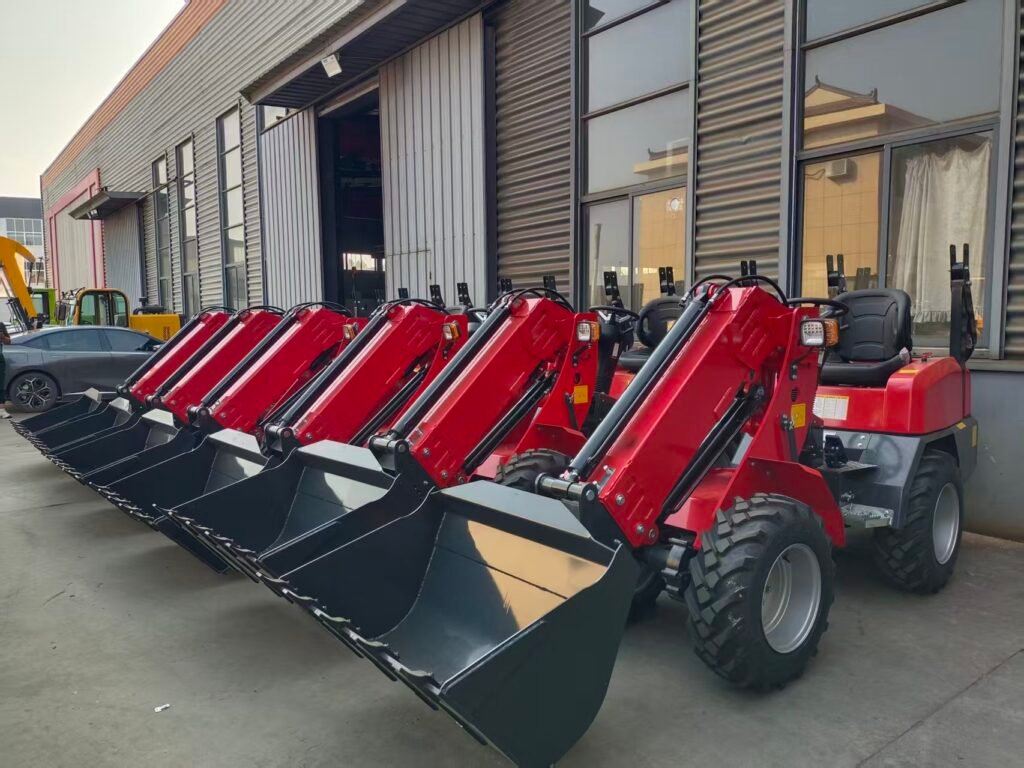
What Exactly Is a Small Telescopic Loader?
Let’s break this down in simple terms:
Definition & core components
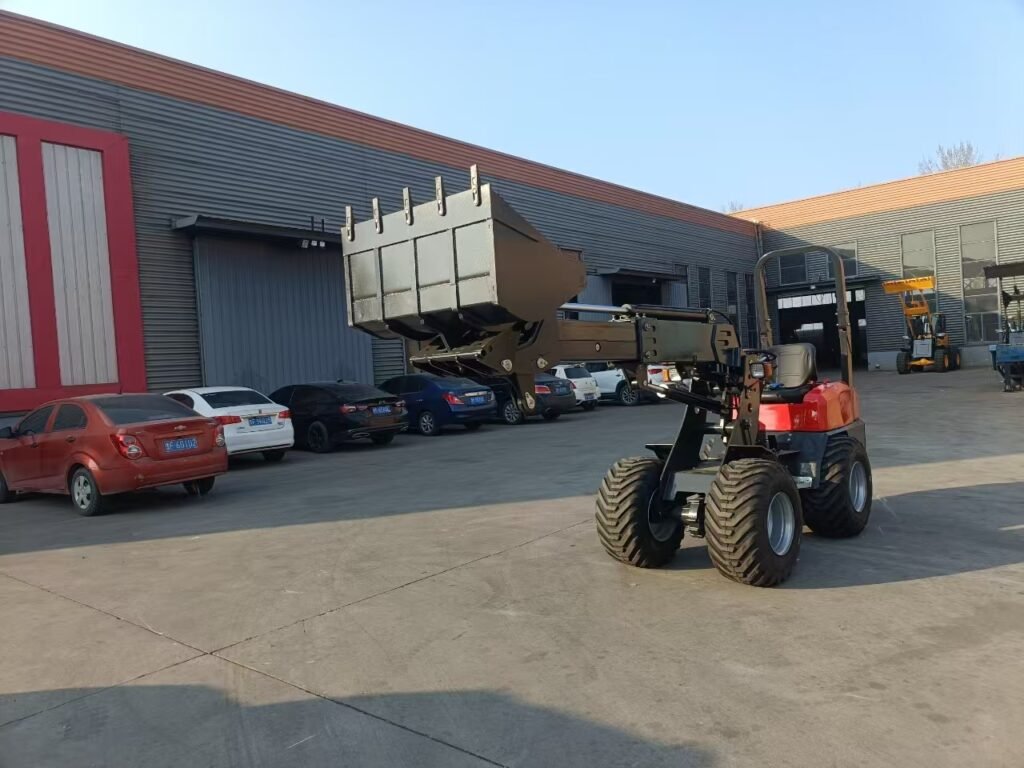
A telescopic loader (sometimes called a tele-loader or telehandler) is a machine with a boom that extends outward and upward, combined with loading or lifting attachments (forks, bucket, grapples) and a chassis that allows mobility (wheels, sometimes tracks). The “small” part typically refers to machines with lower load capacities (say 1–5 tonnes) and shorter reaches (maybe under 10-12 m) compared with large telehandlers used in heavy industrial or large scale construction.
Typical size and capacity
For example, small models from Chinese manufacturers list capacities of around 0.9 t to 3 t for “mini” telescopic loaders. We see in Chinese sourcing directories machines with rated loads of 1.5t, 2.0t, or 2.5t in compact form. The boom reach might be 5-7 m (for compact indoor/warehouse use) or a bit higher for outdoor use. The idea is you get decent reach + lift in a compact footprint.
In summary: the “small telescopic loader” is useful when you don’t need an enormous machine, but you do want flexibility (reach + lift) in a tighter space or less demanding duty cycle.
Key Features and Specifications Buyers Should Consider
When you’re comparing different small telescopic loaders (especially from Chinese manufacturers), here are the features and specs to focus on:
Load capacity & boom reach
- How much weight the loader can lift (e.g., 1.5t, 2t, 3t) safely.
- Maximum reach/boom extension – how far out or up it can go.
- Stability under load (when the boom is extended) – check if the manufacturer gives safe working diagrams.
Engine, drive type & attachments
- Is the machine diesel, petrol, electric, or hybrid? Even small models may still rely on diesel in many Chinese units.
- 2WD vs 4WD – for outdoor rough terrain you may want 4WD.
- Attachments: forks, buckets, grapples, work platform – the more flexible the machine, the more value.
- Hydraulic boom, quick-hitch systems, multi-view operator cabin.
Safety, emissions & certifications
- Compliance with local emissions (India might require certain standards) or CE for export. Chinese manufacturers often list CE/ISO certifications.
- Safety features: ROPS/FOPS cabin, hydraulic lockouts, load charts.
- After-sales service and spare part availability.
Compactness and maneuverability
- Because it’s “small”, footprint matters: width, turning radius, ease of operation in tight spaces.
- Access for maintenance, visibility from the cabin, controls ergonomics.
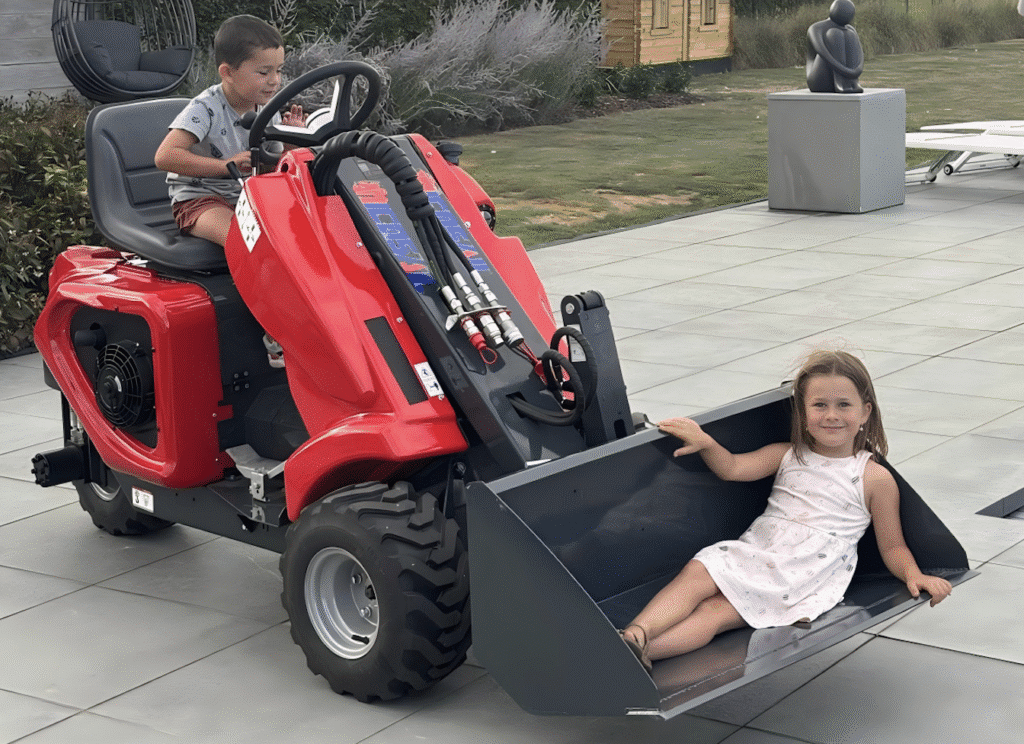
Why China Has Become a Major Source for Telescopic Loaders
A few good reasons:
Scale & manufacturing ecosystem
China has vast manufacturing infrastructure, readily available raw materials, component suppliers (engines, hydraulics, steel), and experience building heavy machinery. That gives manufacturers a cost advantage as well as the ability to produce many units.
Export readiness
Many Chinese makers are already set up for export: they list products on global platforms, handle shipping logistics, comply with various certifications. For example, a listing of Chinese small telescopic loaders shows they come with CE, ISO, RoHS certifications for export.
Competitive pricing
Compared to some Western-manufactured units, Chinese machines often offer lower capital cost for a given specification. This can be an appealing value for buyers, especially those working on tighter budgets or in emerging markets.
Innovation & adaptation
While historically some criticism existed about quality, many Chinese manufacturers are improving both design and quality. They’re offering more compact models, better attachments, and more flexible configurations.
All these combine to make Chinese small telescopic loader manufacturers an attractive option for many buyers.
Overview of the Chinese Manufacturer Landscape
Let’s take a snapshot of what you’ll find when looking at Chinese makers of small telescopic loaders:
Big players vs specialist makers
- On the large side you have well-known brands in heavy construction equipment (though perhaps less focused exclusively on small telescopic loaders). Example: LiuGong (based in China) is a large construction equipment manufacturer.
- On the other hand, there are specialist manufacturers focused on smaller machines or telehandlers / loaders for more niche use. Many of these appear in directories such as Made-in-China.com. For example, “Telescopic Loader” listings show models from various Chinese factories offering 1–3t machines.
Regions & directories
- Many of the machine / loader manufacturers are clustered in provinces such as Shandong, Hunan, etc. The sourcing portals show factories in Shandong (Weifang, Qingzhou) and Hunan.
- Sourcing platforms list many “mini telescopic loader” models with varying specs, showing that this is a lively segment.
What directories show
- For example, one listing shows a “Compact Telescopic Loader for Efficient Material Handling Solutions” from a Chinese factory on Made-in-China.com.
- Another directory shows “China Telehandler Manufacturers” where many factories offer 3-ton, 4-ton models etc.
So when you go sourcing, you’ll have hundreds of potential suppliers (but not all will be equally good).
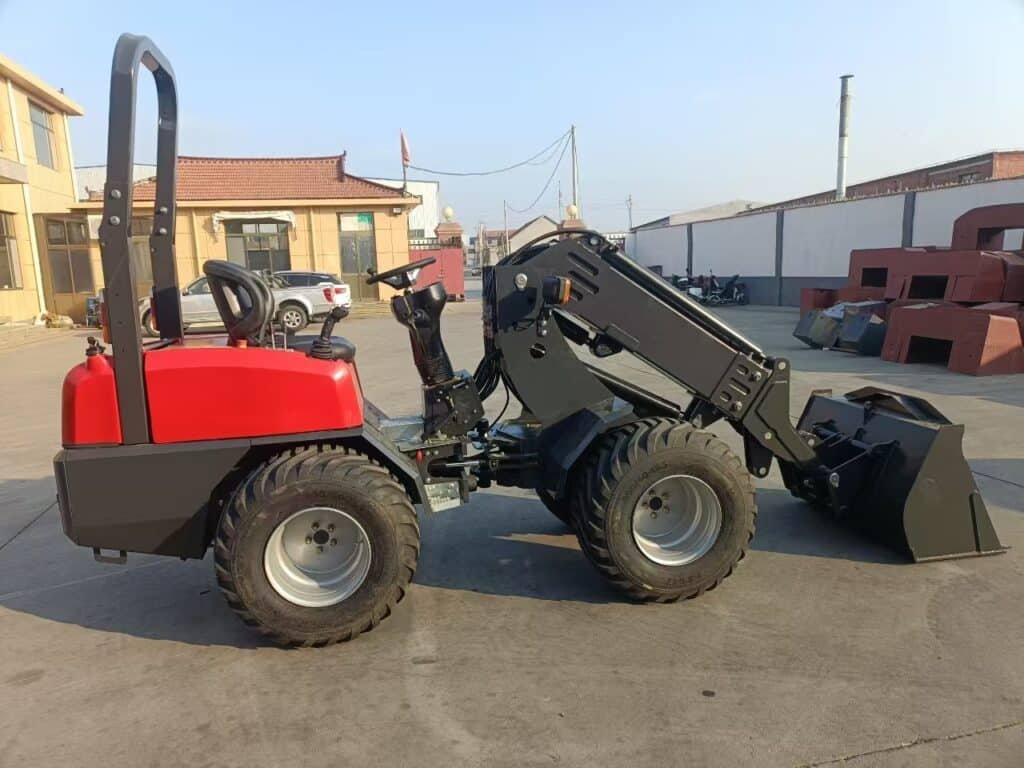
What Makes a Good Manufacturer?
Here are some good criteria to filter and pick a worthy manufacturer for your small telescopic loader purchase:
- Factory capabilities & certifications
- Does the factory have ISO 9001, CE certification, maybe local safety certifications.
- Is there evidence of R&D, testing, quality control.
- Are documents and specifications clearly available.
- Component quality
- The engine should be from a reputable brand (or good backup supply).
- Hydraulic system, boom material, welding quality all matter.
- For export markets, parts supply should be reliable.
- After-sales service & spare parts availability
- A common issue with imported machines is lack of spare parts locally.
- Does the manufacturer or its agent provide support in your country or have spare parts stocked.
- Warranty terms: check what is covered, for how long.
- Customization and specification matching
- A good manufacturer will let you tailor boom reach, attachments, drive type according to your use case.
- You should be able to request drawings, load charts, test results.
- Export logistics & documentation
- Clear shipping terms, clarity on FOB/CIF, ability to handle customs, export compliance.
- Manufacturing is one thing; shipping, duty, demand-side support in your country is another.
- Reputation & references
- Ask for previous export references.
- Check user reviews or testimonials if available (though these can be harder to verify).
- Consider visiting the factory (or engaging a local inspector) if possible.
When you evaluate a brand like Nicosail, you can use the above checklist to see how it stacks up. For example: Does Nicosail produce small telescopic loaders in the load/size range you need? Do they have export experience, spares, service coverage? Comparing multiple suppliers always helps.
Case Study: Considering a Brand Like Nicosail
While this isn’t an advertisement for Nicosail, it’s useful to see how you might consider it among your options when sourcing a small telescopic loader from China.
Where Nicosail fits in
- Suppose you’re looking at small telescopic loaders for tasks like warehouse handling, construction site work in urban areas, or agriculture. A brand like Nicosail (assuming they offer such models) can be part of your shortlist.
- What you want to check: model range (load capacities, boom reach), attachments supported, compactness, whether they support export markets.
What to ask/test
- Ask for the technical specs: e.g., 1.5t lift, 5m boom vs 3t lift, 8 m boom. Which fits your scenario?
- Ask for a certificate of compliance for design, production, safety (CE, ISO, etc).
- Check spare parts: Does Nicosail maintain a spare-parts list? How quickly will they ship parts to your country?
- Service/support network: Will they help with setup, training your operators?
- Warranty: What components are covered, for how long, do they provide consumables or just structural warranty?
- Review prior user experience: Do users of Nicosail report reliability, ease of maintenance?
Benchmarking vs alternatives
- Compare Nicosail’s pricing vs other Chinese manufacturers of similar spec. Are you getting value?
- Compare build quality (boom material thickness, hydraulic hoses, steel quality) – some cheaper machines may under-spec certain parts.
- Compare logistics: delivery time, shipping cost, import duties, local dealer support.
- Compare performance: use case. If you’re in India (for example) you may have different terrain, job conditions, so ensure the spec is suited.
So, Nicosail may well be a viable option — but treat it as part of your evaluation, not simply pick it blindly.
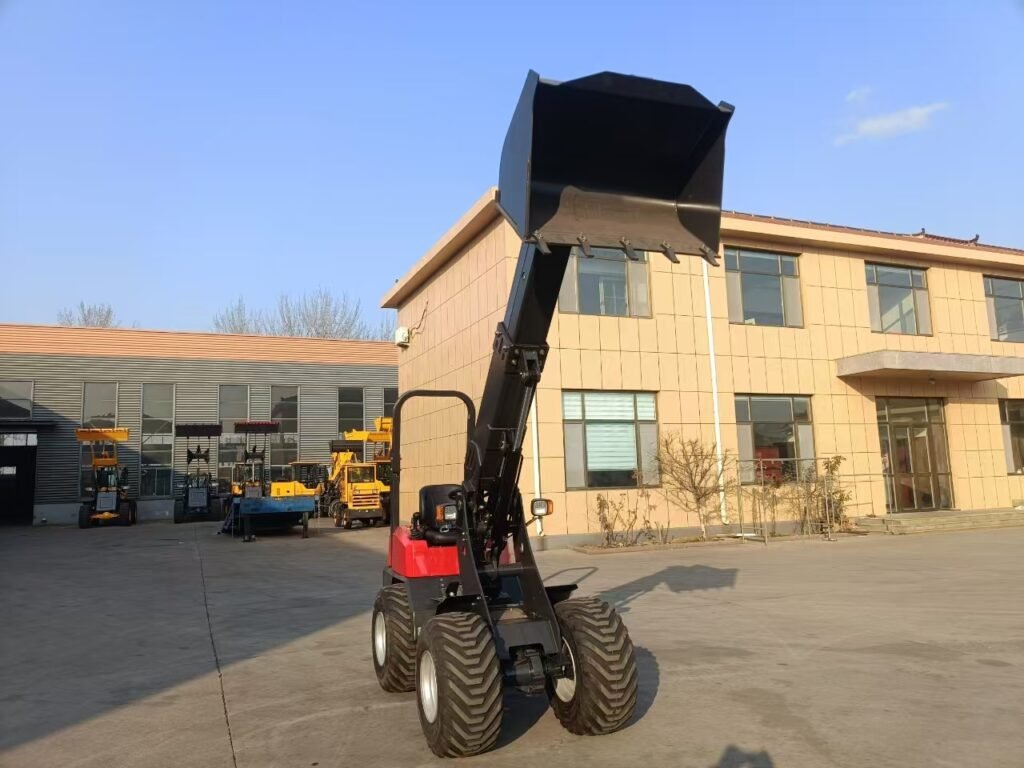
Typical Applications for Small Telescopic Loaders
Understanding where these machines shine helps you decide what spec you need.
Construction sites
In urban or semi-urban construction, where access is limited, corners are tight and jobs require flexibility: a small telescopic loader can pick materials, lift attachments, reach over structures, move pallets or containers.
Agriculture, warehousing, logistics
In farms or agro-operations, you might need a compact loader that can reach into barns, load grain, handle bales, etc. In warehousing, small tele-loaders offer reach and flexibility for material handling where forklifts may not suffice.
Rental fleets & multi-purpose use
For rental companies, a machine that can serve multiple tasks (forks, bucket, grapple) is attractive. It means more utilisation and less idle time. Small telescopic loaders are especially good for customers who don’t need a massive single-purpose machine.
Hence, when you pick a manufacturer, think about the use case and whether the model offered by the manufacturer (like Nicosail or others) is truly suited for that context.
Advantages of Picking a Chinese Small Telescopic Loader
Here are the key positives you’ll likely gain:
- Cost-effectiveness: Chinese manufacturing often allows you to get more specification for your budget vs buying fully imported machines from Western manufacturers.
- Customization: Many Chinese manufacturers are flexible with custom specs – boom length, attachments, tyres, etc.
- Rapid production & delivery: With a well-managed manufacturer you may get faster lead times.
- Wide model range: The Chinese market has many “small” machines in the 1–3t category, so you may find the exact size you need rather than being forced into a “large” one. For example, one listing shows “Mini Telescopic Loader 0.8-1t” from Chinese factory.
These advantages make China compelling as a source for small telescopic loaders — provided you do your homework.
Risks and Challenges to Be Aware Of
Of course, no story is all sunshine — here are some of the main risks:
- Quality variation: The large number of manufacturers means there is wide variation in build quality, component sourcing, QA, etc. You might get a bargain—but you might get a machine that has issues.
- Spare parts / service network: After sale, if parts are delayed or the machine breaks in your country, downtime can be costly. If the manufacturer doesn’t have good service arrangements or local representation, that’s a risk.
- Import/regulatory compliance: Your country (e.g., India) may require specific certifications (emission norms, safety). You’ll need to ensure the machine meets local regulations — else you may face issues with registration, usage or resale.
- Logistics & hidden costs: Shipping, customs, duties, local taxes, transport to site—these may add significantly to the cost. Also, local operator training might be needed if machine design differs.
- Resale value: Some lesser-known Chinese brands may have weaker resale value compared to established global brands. This matters if you plan to sell or upgrade later.
So yes — the benefits are real, but the risks are manageable if you do proper due diligence.
How to Source from China: Step by Step Guide
Here’s a practical guide if you decide to source a small telescopic loader from China:
- Define your requirements
- What is the lift capacity you need? (1t, 2t, 3t…)
- What boom reach? (5m, 7m, 10m…)
- What drive conditions? (indoor, outdoor, 4WD?)
- What attachments will you use (forks, bucket, grapple?)
- Budget, delivery timeframe, job environment, terrain.
- Research and shortlist manufacturers
- Use directories like Made-inChina.com. For example, many Chinese telescopic loader listings appear there.
- Check company history, certifications, export experience.
- For each manufacturer (including brands like Nicosail), request catalogues, model lists, specs, photos, references.
- Request quotes and factory visits / inspections
- Ask for FOB or CIF quotations, delivery lead‐time, warranty terms.
- If possible, arrange a visit to the factory or hire a third-party inspection service. Observe build quality, welding, boom operation, hydraulics.
- Ask for sample machines or videos of machine in operation.
- Negotiate terms, payment, shipping
- Clarify payment terms (often 30% deposit, 70% at shipment).
- Clarify shipping method, incoterms (FOB, CIF), who handles customs, who handles tax.
- Clarify warranty, after‐sales support, spare parts supply.
- Import, install & train
- Once machine arrives, inspect immediately.
- Ensure training for operators—especially if machine is slightly different than what you’re used to.
- Put in place a maintenance plan (see next section for what to track).
- Monitor performance and supplier relationship
- Track machine’s first months of operation for any issues.
- Keep supplier informed of any spare parts needs.
- Consider building up a local parts stock if usage is heavy.
Following this approach improves your chances of success when sourcing from China.
Importing to India (or Other Markets) – What to Check
If you’re based in India (or another emerging market), special considerations apply:
- Customs, duties & logistics: Importing from China means ocean freight, customs duties, local transport. Factor these into your total cost.
- Certification and compliance: India might require certain emission standards, safety regulations (for example for diesel engines). Make sure the Chinese machine meets local rules or can be adapted.
- Service network and local spares: If your importer or agent for the Chinese manufacturer (or the manufacturer itself) doesn’t provide local support in India, you may face delays.
- Training & language: The machine might come with documentation in Chinese/English—ensure you have proper manuals, operator training.
- Resale market and local perception: In some markets, machines from top global brands hold value; lesser-known Chinese brands might have weaker resale value. That may affect your total cost of ownership.
Thus, importing is feasible and often beneficial — but plan carefully.
Maintenance & Lifecycle Considerations
Once you have your small telescopic loader — whether from a Chinese manufacturer or otherwise — the way you maintain it will significantly affect its profitability and lifespan.
Regular checks and maintenance
- Hydraulic system: boom cylinders, hoses, connections—check for leaks, wear.
- Engine: follow manufacturer’s schedule for oil changes, filters, clean intake/exhaust, cooling system. For instance, one Chinese maker recommends maintenance every 500 hours or six months.
- Chassis, tyres/wheels: ensure tyres properly inflated, check for structural cracks, weld inspections.
- Boom and attachments: inspect boom extension mechanism, greases, pins, wear surfaces.
- Safety systems: brakes, emergency stops, load-charts, operator cabin components.
Spare parts and consumables
- Keep a stock of commonly needed parts: filters, hydraulic hoses, seals, etc. This is even more important if your manufacturer is overseas.
- Document the machine’s parts list and ensure you can source replacements locally or via supplier.
Operator training and usage
- Proper training reduces wear and accidental damage (boom misuse, overloading).
- Use machine within its rated capacity and reach – pushing beyond spec will reduce lifespan.
- Keep logbooks of usage hours, maintenance intervals and any issues.
By taking maintenance seriously, you’ll maximise the value of your investment.
Future Trends in the Small Telescopic Loader Space
It’s worthwhile to look ahead – the market isn’t static. Here are some of the emerging trends:
- Electrification / hybrid drives: As emission regulations tighten globally, even small loaders are expected to shift towards electric or hybrid drives. Chinese manufacturers are beginning to pay attention to this.
- Smart / connected machines: Telematics, remote monitoring, usage tracking and predictive maintenance will increasingly be features even in smaller machines.
- More compact, agile designs: The trend towards urban construction, tighter job sites means machine makers will push for smaller footprints, better manoeuvrability, multi-attachment versatility.
- Globalised supply chain & localisation: Chinese manufacturers may increasingly localise some assembly or parts supply closer to export markets to reduce lead times and improve service.
- Sustainability & emissions standards: International buyers will demand compliance with stricter standards — so Chinese manufacturers will need to align.
If you source now and keep these trends in mind, you’ll be better positioned for future upgrades or resale.
Summary – How to Choose the Right Chinese Manufacturer for You
Let’s recap:
- Start with clear specification: what capacity, reach, attachments, job site conditions.
- Shortlist manufacturers in China based on certifications, export experience, after-sales service.
- Include brands like Nicosail in your comparison but don’t rely solely on brand name; dive into spec, service, cost, parts.
- Evaluate cost not just purchase price, but total cost: shipping, import duties, service, downtime, resale value.
- Inspect quality, visit factory (or get inspection), test the machine if possible.
- Plan for maintenance, operator training, parts availability.
- Consider future trends: if you’ll keep the machine for many years, build in flexibility (attachments, electrification, etc).
By doing this, you can leverage the strengths of Chinese small telescopic loader manufacturers while managing the risks — and you’ll be better placed to pick a machine that lasts, performs well and gives you good value.
FAQs
Q1: What is the typical lead time when ordering a small telescopic loader from a Chinese manufacturer?
A1: Lead time varies depending on specification, factory backlog, and shipping. For relatively standard models it might be 4-10 weeks after order and deposit. Customised versions may take longer. Always ask the manufacturer for specific lead times and ensure shipping time is included.
Q2: Are Chinese small telescopic loaders reliable enough for export markets like India?
A2: Yes — many are reliable, provided you select a good manufacturer, check quality, ensure parts and service support. Reliability depends less on country of origin and more on build quality, component sourcing and after-sales support.
Q3: What attachments should I consider when buying a small telescopic loader?
A3: Common attachments include forks (for pallet handling), buckets (for bulk material), grapples (for logs or rubbish), work platforms (for aerial work). Choose attachments relevant to your application, and ensure the manufacturer or brand supports them.
Q4: How important is certification like CE or ISO when importing from China?
A4: Very important. Certifications provide evidence of compliance with quality and safety standards, especially when importing into regulated markets. Without them you may face difficulties with registration, insurance or resale.
Q5: Should I be concerned about spare parts availability for a machine from China?
A5: Yes — it is a key factor. When you import a machine, downtime caused by lack of parts can reduce your profitability. Ensure the manufacturer or its agent can supply spare parts within your country or nearby, and assess critical parts availability.
Q6: How do I judge whether a manufacturer like Nicosail is a good choice?
A6: Use the checklist: check model range, specs, factory capabilities, certifications, export references, spare parts logistics, warranty terms, customer feedback. Compare Nicosail against alternatives in terms of cost, service and spec. That way you make a balanced decision rather than just picking the lowest price.
Conclusion
Choosing a small telescopic loader from a Chinese manufacturer can be a smart, cost-effective decision — especially if you do your homework. By understanding what a “small” telescopic loader entails, what specs matter, how to evaluate manufacturers (including brands like Nicosail), and how to manage import, maintenance and future trends — you’re putting yourself firmly in control.
Take your time, compare carefully, ask the right questions, and you’ll find a machine that fits your needs, budget and job site conditions. Good luck with your sourcing journey!